Buying guide
Milk Frother Buying Guide
How to choose a milk frother: steam vs whisk vs induction, capacity math, temperature control, and a buy-if/avoid-if decision framework.
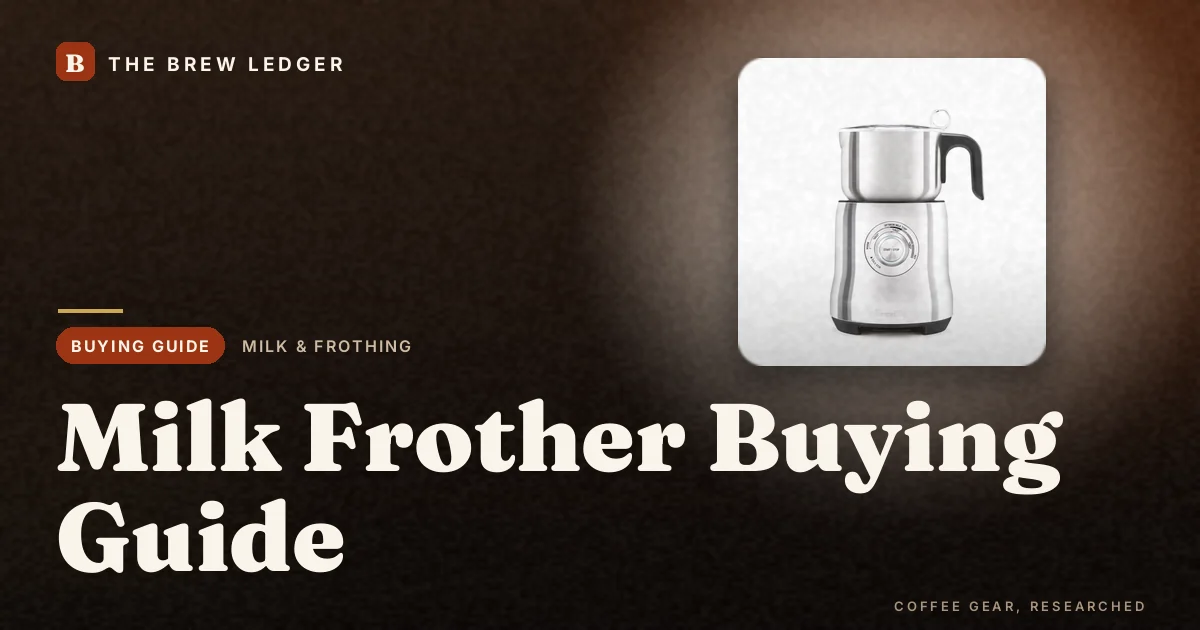
Start with our top 3


The three frothing technologies
Spinning-whisk jugs heat and aerate automatically: press a button and get foam. They are the default choice and cover the Nespresso Aeroccino 4, Capresso Froth Pro, Miroco, DeLonghi EMFI, and Hadineeon. Induction jugs, represented here by the Breville Milk Cafe, heat more evenly and usually add temperature control and larger capacity. Stovetop steamers, the Bellman CX-25, generate real steam pressure and make true microfoam at the cost of technique. Handheld battery wands only froth; they never heat. Match the technology to how much effort you want to spend per drink.
Capacity math: count your drinks
Frothing capacity decides how many cycles your morning needs. A 120 ml frother like the Aeroccino 4 makes two cappuccinos per cycle. An 8 oz frother like the Capresso doubles that. The Breville's 16 fl oz covers three. Heating-only maximums run higher everywhere: 240 ml, 12 oz, and 25 fl oz respectively. Count the milk drinks your household makes on the busiest morning, then buy the smallest frother that covers it in one cycle; oversized jugs waste milk and counter space.
Temperature control matters more than you think
Most jug frothers target around 150 degrees F automatically, which suits dairy. Plant milks scorch and separate at lower temperatures, and kids' cocoa wants a warm setting, not a hot one. The Breville's dial and the Capresso's hot/warm/cold presets exist for exactly these cases. If everyone drinks whole-milk lattes, presets are fine. If your household mixes dairy, oat, and kids' drinks, pay for the control.
Cleaning decides whether you keep using it
A frother that is annoying to clean becomes a cabinet decoration. Dishwasher-safe jugs (Breville, Aeroccino 4 up to 70 degrees C, Capresso pitcher) get rinsed and forgotten. Hand-wash-only models (Miroco, DeLonghi EMFI) need a rinse after every use without exception, because dried milk scorches onto the next cycle. Wands need only a whisk rinse but the handle must stay dry. Be honest about your cleaning habits before choosing.
Decision framework: buy if, avoid if
Buy a spinning-whisk jug if you make one to two milk drinks daily and want heat plus foam in one step; avoid it if you want true microfoam for latte art. Buy an induction jug if you make drinks for several people, make hot chocolate in volume, or drink plant milks that need temperature control; avoid it if counter space is tight or you make one small drink. Buy a stovetop steamer if latte art is the goal or you want cafe milk off-grid; avoid it if you will not practice steaming technique. Buy a handheld wand if you travel, work from an office, or want the cheapest working foam; avoid it as your only home frother if you make hot milk drinks daily, since heating separately gets old fast.
What about the milk itself?
The frother is half the equation. Whole dairy milk foams most reliably; barista-edition oat milk is the best plant alternative; regular almond milk foams poorly in any machine. Start with cold milk and never re-froth. Our micro-guides go deeper: what milk froths best, best milk for a latte, and oat vs almond milk for frothing.
Questions, answered
How much should I spend on a milk frother?
Match spend to use. A handheld wand covers occasional foam for the price of a few coffees. A budget jug like the Miroco adds heating for modest money. Mid-tier jugs like the Aeroccino 4 and Capresso Froth Pro are the sweet spot for daily single or double drinks. The Breville and Bellman are premium tools for heavy use or specific goals, temperature control and real steam respectively.
Do I need a frother if my espresso machine has a steam wand?
No. A machine steam wand already makes better microfoam than any electric jug. A jug frother only makes sense as a second device for decaf drinkers, kids' cocoa, or households where someone wants foam without touching the machine.
Are expensive frothers worth it?
When the extra money buys a spec you will use: the Breville's 16 fl oz capacity and temperature dial, or the Bellman's real steam. It is not worth it when the premium buys capacity you will never fill or presets you will never press.
How long do electric frothers last?
Heating elements and motors wear with use; daily-use jugs typically serve several years with prompt cleaning. The Bellman has no electronics and its stainless construction is built for decades. Whisks and discs are the usual first failures on jug models, so designs with included spares, like the Miroco, have a practical edge.