In-depth review
Bialetti Moka Express Review: Strong Coffee Without the Espresso Machine
In-depth review of the Bialetti Moka Express: stovetop pressure, sizes, materials, and where moka coffee stops short of espresso.
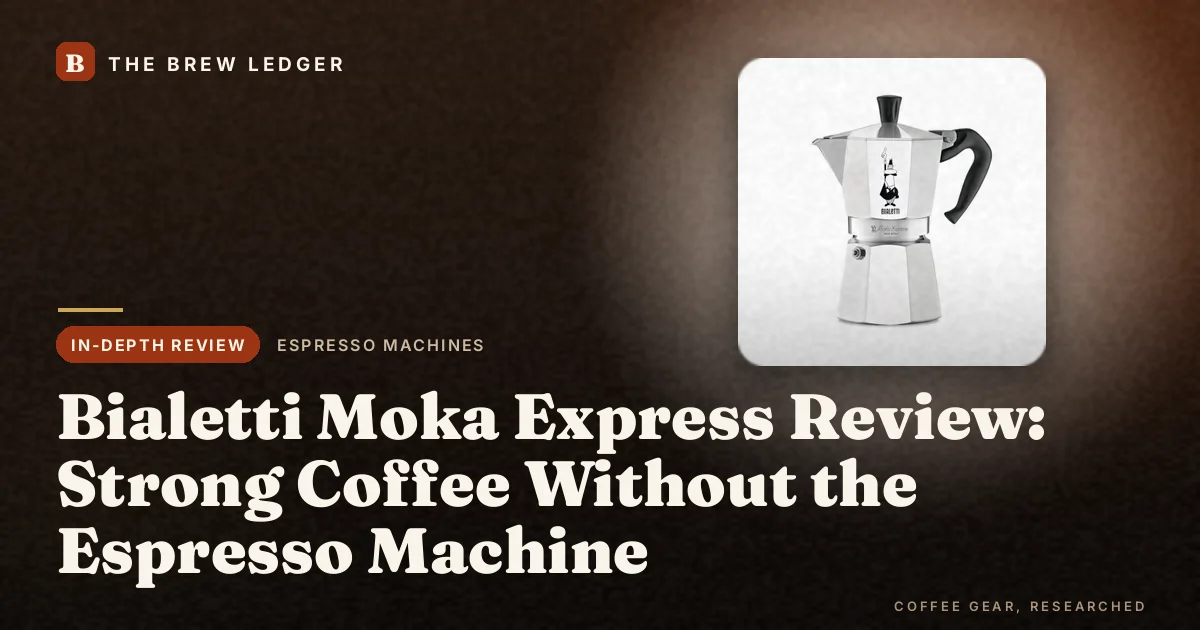

Bialetti Moka Express
The 1933 octagonal icon that defined stovetop coffee.
- Invented: 1933 by Alfonso Bialetti
- Body: Cast aluminum, octagonal
- Sizes: 1, 2, 3, 4, 6, 9, and 12 cups
Our verdict
The Moka Express remains the best value in strong coffee, full stop. For the price of a few cafe drinks you get a 1933-proven brewer in six sizes that makes intense, heavy-bodied coffee at about 1.5 bars with no electricity and nearly no maintenance. The honest limits: it is not espresso, it makes no crema, it cannot steam milk, and the aluminum body stays off induction hobs. Buy it for strong black coffee; buy a pump machine when you want real shots. The numbers behind that choice are in our moka vs espresso machine and stovetop vs super-automatic comparisons, and its place in the lineup is in our best brewers guide.
What we like
- In production since 1933 with the same octagonal aluminum design
- Seven sizes from 1 to 12 cups cover solo drinkers to dinner parties
- Steam pressure does the work; no plunging, pouring technique, or filters to buy
- Every gasket and filter plate is replaceable, so pots last decades
What to watch out for
- Aluminum body is not induction-compatible and should be hand washed
- Brew strength is fixed by the design; little room to experiment with recipes
- Leaving it on the heat too long scorches the coffee, the classic beginner mistake
Who it is for
Drinkers who want intense stovetop coffee with minimal cost, no electricity, and a ritual that has worked since 1933.
Brewing and flavor
Water in the lower chamber heats, steam pressure pushes it up through the coffee bed at about 1.5 bars, and strong coffee collects in the top chamber in about five minutes. The cup is heavy, intense, and low in acidity: closer to espresso than drip, but missing the syrupy texture and crema that 9-bar extraction creates. Grind fine, fill the basket without tamping, and pull it off the heat the moment it starts to gurgle to avoid the bitter tail of the brew.
Sizes and materials
Six sizes from 1-cup to 12-cup mean you buy the pot that matches your household; the 6-cup brews about 10 oz, which is two small mugs. The cast aluminum body heats fast on gas and electric coil stovetops but will not work on induction. Aluminum also demands hand-washing without soap: detergents strip the seasoned patina and invite metallic off-tastes.
Durability and parts
Few products match the Moka Express for longevity. The design has barely changed since 1933, and replacement gaskets and filter plates are sold worldwide for little money. The wear part is the rubber gasket, which needs replacing roughly yearly with daily use. Everything else is solid aluminum with no electronics to fail.
How it stacks up
Against the Breville Barista Express, the physics differ completely: 1.5 bars of stovetop steam vs a 15-bar pump with pre-infusion, and no electricity vs 1600W. The Barista Express makes true espresso with crema and steams milk; the Moka Express makes strong coffee for a fraction of the price with nothing to break. Against the AeroPress Original, both are portable and cheap, but the AeroPress uses immersion plus gentle air pressure through 350 included paper micro-filters for a cleaner cup in about two minutes, while the moka pot's metal filter leaves more oils and fine sediment. Choose moka for tradition and body; choose AeroPress for clarity and travel.
Key specifications
- Invented
- 1933 by Alfonso Bialetti
- Body
- Cast aluminum, octagonal
- Sizes
- 1, 2, 3, 4, 6, 9, and 12 cups
- Heat source
- Gas and electric stovetops (not induction)
- Care
- Hand wash recommended
Sources: Bialetti official product specifications, Major retailer product listings, Published coffee gear reviews
What owners report
Owners praise
- Owners praise a design that has stayed in production since 1933, with the same octagonal aluminum shape
- Many owners like having seven sizes from 1 to 12 cups, covering solo drinkers through dinner parties
- Long-term owners say steam pressure does all the work, with no plunging, pouring technique, or filters to buy
Common complaints
- Some owners are frustrated that the aluminum body is not induction-compatible and needs hand washing
- Owners note brew strength is fixed by the design, leaving little room to experiment with recipes
- A common complaint is scorched coffee when the pot is left on the heat too long, a classic beginner mistake
Also consider
AeroPress Original
The 2005 original that turned a tube and a plunger into a brewing icon.
- Designer: Alan Adler (released 2005)
- Capacity: 1 to 3 cups per press
Sources: AeroPress official product specifications, Major retailer product listings, Published coffee gear reviews
Check current price
DeLonghi Stilosa EC260BK
The cheapest DeLonghi espresso: 15 bars, manual frother, pods or grounds.
- Pump: 15-bar
- Boiler: Stainless steel boiler
Sources: DeLonghi official product specifications, Major retailer product listings, Published coffee gear reviews
Check current priceResearch-based assessment. TheBrewLedger has not hands-on tested this product; this evaluation synthesizes manufacturer specifications, retailer documentation, and published expert reviews.
Questions, answered
What grind should I use in a moka pot?
Fine, a touch coarser than espresso. Too fine and the pot chokes or brews bitter; too coarse and the coffee comes out weak and watery. Fill the basket level without tamping.
Can I use the Moka Express on induction?
No. The aluminum body will not heat on an induction hob. Bialetti makes stainless steel models for induction; the classic Moka Express is gas, electric coil, and radiant only.
Why does my moka coffee taste bitter?
Usually heat management: leaving the pot on the burner after brewing starts scorches the coffee. Pull it off at the first gurgle. Old, worn gaskets and rancid oils from soap washing are the other common culprits.
How often should I replace the gasket?
About once a year with daily use, sooner if you see steam leaking from the sides or the brew sputters. Gaskets and filter plates are cheap and take minutes to swap.