In-depth review
Bialetti Moka Express Review
In-depth Bialetti Moka Express review: the 1933 aluminum original assessed on size range, heat-up, build, and how it stacks up against the Venus and Brikka.
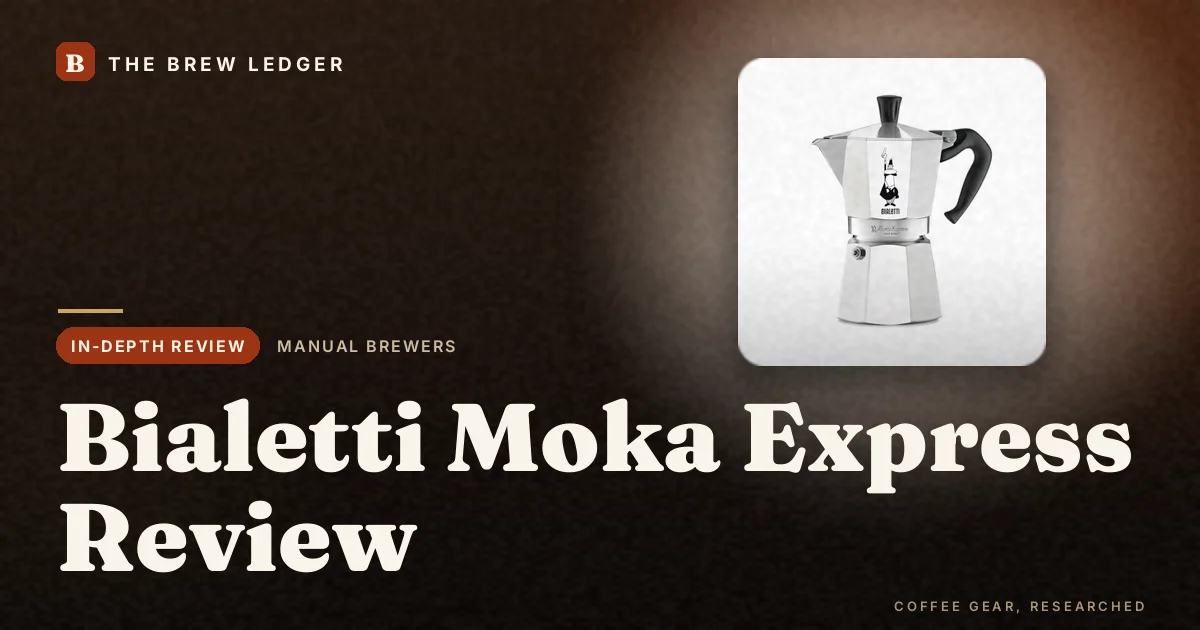

Bialetti Moka Express
The 1933 octagonal icon that defined stovetop coffee.
- Invented: 1933 by Alfonso Bialetti
- Body: Cast aluminum, octagonal
- Sizes: 1, 2, 3, 4, 6, 9, and 12 cups
Our verdict
The Moka Express remains the default moka pot because it nails the fundamentals: six sizes, fast aluminum heat-up, and parts availability no rival approaches. Its trade-offs are fixed by physics, not design flaws: aluminum cannot work on induction, and it needs prompt rinsing to stay flavor-neutral. If you brew on gas or coil and want the authentic ritual at the lowest proven price, nothing here beats it. Induction owners should read our moka pot vs espresso machine guide context and then buy the Venus instead.
What we like
- In production since 1933 with the same octagonal aluminum design
- Seven sizes from 1 to 12 cups cover solo drinkers to dinner parties
- Steam pressure does the work; no plunging, pouring technique, or filters to buy
- Every gasket and filter plate is replaceable, so pots last decades
What to watch out for
- Aluminum body is not induction-compatible and should be hand washed
- Brew strength is fixed by the design; little room to experiment with recipes
- Leaving it on the heat too long scorches the coffee, the classic beginner mistake
Who it is for
First-time moka pot buyers on gas or electric coil stovetops who want the proven classic.
Design and build
The octagonal cast aluminum body has been in production since 1933, and the design is unchanged because it works: eight sides give the lower chamber rigidity, the bakelite-style handle stays cool, and the three chambers separate for rinsing in seconds. Six sizes from 1-cup to 12-cup mean you can match the pot to your household instead of adapting your habit to the pot.
Brewing performance
Aluminum's fast heat conduction is the Moka Express's brewing advantage: on a gas burner the 6-cup reaches brewing pressure quickly and evenly, producing the dense, chocolatey cup the moka method is known for. Use a medium-fine grind, fill the basket loosely without tamping, and remove the pot at the first sputter for the cleanest cup.
How it stacks up
Against the Bialetti Venus, the Moka Express heats faster and costs less, but the Venus's stainless steel works on induction and never affects flavor, advantages aluminum cannot match. Against the Bialetti Brikka, the Moka Express offers six sizes versus the Brikka's two, but the Brikka's pressure valve produces a crema layer the Express cannot. For the full ranking, see our best moka pots guide.
Care and longevity
Rinse with hot water only, no soap, and dry the chambers separately to prevent the aluminum from oxidizing. The rubber gasket and filter plate are wear items; Bialetti sells replacements cheaply, and a fresh gasket every year or two of daily use keeps the seal tight. With that minimal care, these pots routinely last decades.
Key specifications
- Invented
- 1933 by Alfonso Bialetti
- Body
- Cast aluminum, octagonal
- Sizes
- 1, 2, 3, 4, 6, 9, and 12 cups
- Heat source
- Gas and electric stovetops (not induction)
- Care
- Hand wash recommended
Sources: Bialetti official product specifications, Major retailer product listings, Published coffee gear reviews
What owners report
Owners praise
- Owners praise a design that has stayed in production since 1933, with the same octagonal aluminum shape
- Many owners like having seven sizes from 1 to 12 cups, covering solo drinkers through dinner parties
- Long-term owners say steam pressure does all the work, with no plunging, pouring technique, or filters to buy
Common complaints
- Some owners are frustrated that the aluminum body is not induction-compatible and needs hand washing
- Owners note brew strength is fixed by the design, leaving little room to experiment with recipes
- A common complaint is scorched coffee when the pot is left on the heat too long, a classic beginner mistake
Also consider

Bialetti Venus
Bialetti's stainless steel answer for induction cooktops, in the classic moka silhouette.
- Material: 18/10 stainless steel
- Sizes: 2, 4, 6, and 10 cup
Sources: Bialetti official product specifications, Major retailer product listings, Published coffee gear reviews
Check current price
Bialetti Brikka
The only moka pot with a pressure valve that builds crema, the closest stovetop brewing gets to espresso.
- Material: Aluminum with silicone pressure valve
- Sizes: 2 and 4 cup
Sources: Bialetti official product specifications, Major retailer product listings, Published coffee gear reviews
Check current priceResearch-based assessment. TheBrewLedger has not hands-on tested this product; this evaluation synthesizes manufacturer specifications, retailer documentation, and published expert reviews.
Questions, answered
How long does a Bialetti Moka Express last?
Decades with basic care. The aluminum body itself is nearly indestructible in normal use; the gasket and filter plate are consumables that cost little to replace every year or two of daily brewing.
Can the Moka Express go in the dishwasher?
Bialetti recommends hand rinsing with hot water and no soap. Dishwasher detergent oxidizes aluminum and degrades the gasket faster. A quick rinse takes under a minute.
Which Moka Express size should I get?
The 6-cup brews about 10 oz and suits one to two drinkers; the 3-cup brews about 5 oz for solo use. Remember that moka pots brew a fixed volume, so buy the size you will actually fill. Our buying guide has the full size decoder.
Why is my Moka Express sputtering?
Sputtering almost always means the grind is too fine, the basket was tamped, or the heat is too high. Coarsen the grind slightly, fill loosely, and use medium heat. More fixes are in our troubleshooting guide.