Buying guide
AeroPress Buying Guide: Which Model, Which Method
How to choose between the AeroPress Original, Go, Clear, and XL, plus recipe basics: standard vs inverted, paper vs metal filters, and what else you need.
Start with our top 3
Which AeroPress model fits you
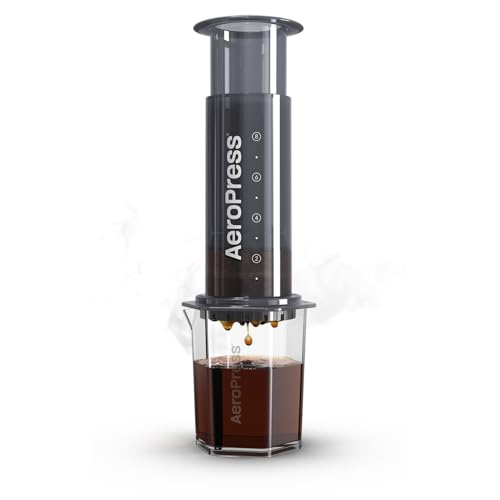
Four models, one decision tree. Choose the Original if you brew at home and want the lowest price with full accessory compatibility. Choose the Go if you brew on the road; the nesting kit and lidded mug justify the premium. Choose the Clear if you are learning and want to watch the extraction, especially the inverted method. Choose the XL if you brew for two or more daily and are tired of pressing twice. Our AeroPress vs Go guide settles the most common dilemma.
Standard vs inverted: the recipe decision
Standard method: filter cap down on your mug, add coffee and water, steep, plunge. Simple, but coarse grinds can drip through before you plunge. Inverted method: assemble the brewer upside down, steep with full immersion and zero drip, then flip onto the mug and plunge. Inverted gives more control and is the competition favorite; standard is easier and perfectly good. Start standard, learn inverted when you are curious.
Paper vs metal filters
Paper micro-filters make the classic AeroPress cup: clean, bright, sediment-free. The stainless steel filter adds body and oils, ends filter reorders, and lets fine sediment through. Keep paper if you prize clarity; switch to steel if you want a heavier cup or hate consumables. Many owners keep both. The steel filter fits the Original, Go, and Clear, but not the XL.
Buy it if / skip it if: the decision framework
Buy an AeroPress if: you brew 1 to 3 cups at a time; you want a fast, forgiving brewer; you travel or have limited counter space; you enjoy tweaking recipes; you want easy cleanup. Skip it if: you routinely brew for 4 or more (get a moka pot, Chemex, or the XL); you want true espresso (no hand brewer reaches 9 bars); you hate any technique at all (the Clever Dripper asks less of you). If you are still deciding between models, the beans and grind guide shows what each setup does best.
What else you need: grinder, kettle, scale
The brewer is the cheapest part of good coffee. A burr grinder matters more than the AeroPress model: grind fresh at medium-fine (table salt) and you will out-brew any pre-ground setup. Any kettle that pours hot water works; a gooseneck is nice but not required the way it is for pour-over. A kitchen scale helps you repeat recipes (start around 17 g coffee to 250 ml water), but the included scoop gets you close enough to start.
The starter recipe
Standard method: rinse a paper filter in the cap and twist it on. Add 17 g of medium-fine coffee, pour 250 ml of just-boiled water, stir, steep 60 to 90 seconds, then plunge gently for 30 seconds, stopping when you hear hissing. Taste, then adjust one variable at a time: sour means grind finer or steep longer; bitter means coarsen the grind or shorten the steep. For bean and roast guidance, see best coffee beans for AeroPress.
Questions, answered
Do I need the Go if I already have the Original?
No, unless you travel. The cup is effectively identical; the Go's value is entirely the nesting travel kit. At home the Original's roomier chamber is actually nicer to use.
How long does an AeroPress last?
Years. The chamber and plunger are tough BPA-free plastic; the only wear item is the silicone seal, which lasts years and is cheap to replace. Rinse after use and avoid half-compressing the plunger in storage.
Is the AeroPress dishwasher safe?
AeroPress says the parts are dishwasher safe (top rack), but hand rinsing takes seconds and extends the seal's life. Most owners never bother with the dishwasher.
What is the number one beginner mistake?
Grinding too fine and then fighting the plunger, or plunging aggressively. Use a medium-fine grind and press gently; if it fights you, the grind is the problem, not your strength. More fixes live in our AeroPress troubleshooting guide.