Fix it
AeroPress Troubleshooting: Fix Bitter, Sour, and Stuck Brews
Fix the most common AeroPress problems: hard plunging, drip-through, bitter or sour cups, gritty brews, and worn seals.
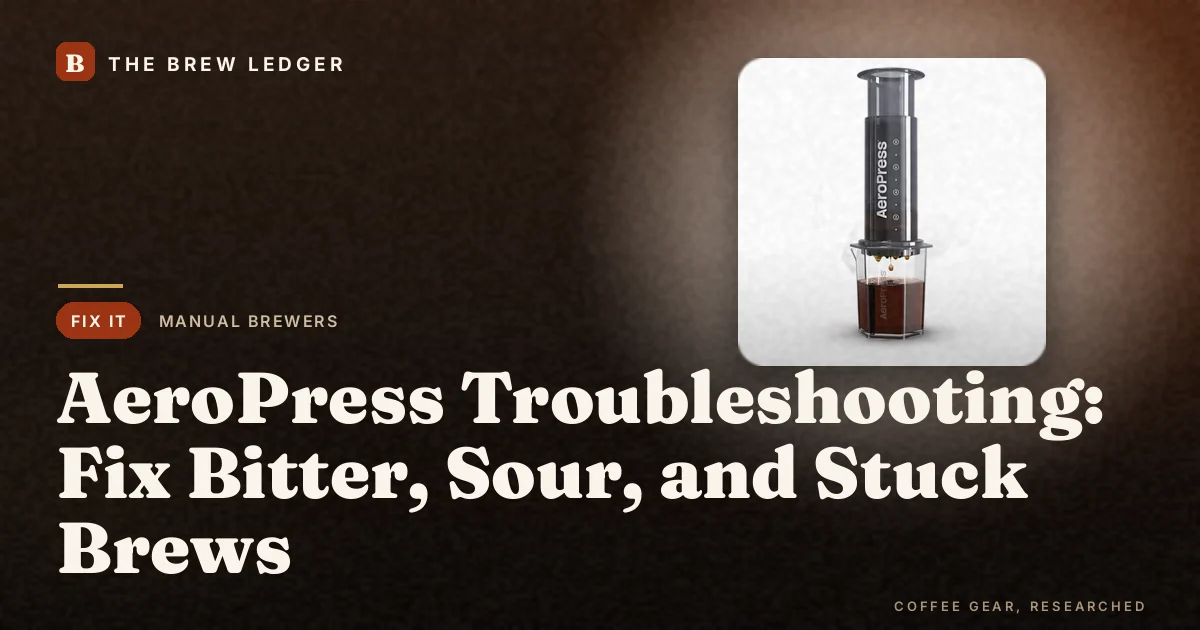
Most AeroPress problems trace to three variables: grind size, water temperature, and steep time. A plunger that fights you means the grind is too fine; coffee that drips through before plunging means it is too coarse; bitter cups mean over-extraction and sour cups mean under-extraction. Work through the fixes below one variable at a time.
The plunger is very hard to press
Your grind is too fine. Coarsen it toward table-salt texture and press gently; never force the plunger, which can crack the chamber or spray hot coffee. If the grind is already medium-fine, you may be pressing too fast: a slow 30-second plunge is the target.
Coffee drips through into the mug before I plunge
Your grind is too coarse for the standard method, or the filter is not seated flat. Either grind finer, or switch to the inverted method, which seals the chamber and eliminates drip-through entirely. Make sure the paper filter sits flat in the cap with no folds.
The cup tastes bitter and harsh
Over-extraction. Shorten the steep to 60 seconds, coarsen the grind slightly, or drop the water temperature to around 85 C (185 F) instead of full boil. Dark roasts extract faster, so they need the shorter, cooler treatment most.
The cup tastes sour or weak
Under-extraction. Grind finer, extend the steep toward 90 seconds or two minutes, or use hotter water. Also check your ratio: too little coffee for the water (below about 1:17) tastes thin no matter the technique.
The cup is gritty or silty
Fine sediment is getting past the filter. With paper filters, check that the filter is flat and the cap is twisted on fully. With the steel filter, some silt is inherent; grinding more uniformly (a burr grinder, not a blade) reduces it. A small amount of sediment at the bottom of the cup is normal for immersion brewing.
The plunger slides too easily and the seal looks worn
The silicone seal wears with age and with storage half-compressed. Remove the seal, wash it, and check for nicks; if it no longer grips the chamber walls, replace it (replacement seals are cheap and widely sold). Store the brewer with the plunger pushed fully through or fully removed, never parked halfway.
Questions, answered
Why does my AeroPress coffee taste different every day?
Inconsistent grind is the usual cause, especially with blade grinders. Water temperature and steep time are the other two. Fix the grind first with a burr grinder, then keep one recipe (we suggest 17 g to 250 ml, 90-second steep) until cups stabilize.
Is it normal for water to leak around the filter cap?
A few drops are normal with very fine grinds. Steady leaking means the filter is folded, the cap is cross-threaded, or the seal is worn. Reseat the filter flat and twist the cap until it locks.
Can I reuse paper filters?
Many brewers rinse and reuse each filter a few times without noticeable difference. The filters are designed as single-use, so expect slightly slower drawdown after a couple of reuses. For zero waste, switch to the steel filter.
When should I replace the whole brewer?
Rarely. The chamber and plunger last many years; only the silicone seal is a wear item. Replace the brewer only if the chamber is cracked or deeply scored inside, which affects the seal.