Fix it
Super-Automatic Espresso Machine Troubleshooting
Fix weak coffee, grinder jams, milk frothing failures, descale warnings, and common super-automatic problems.
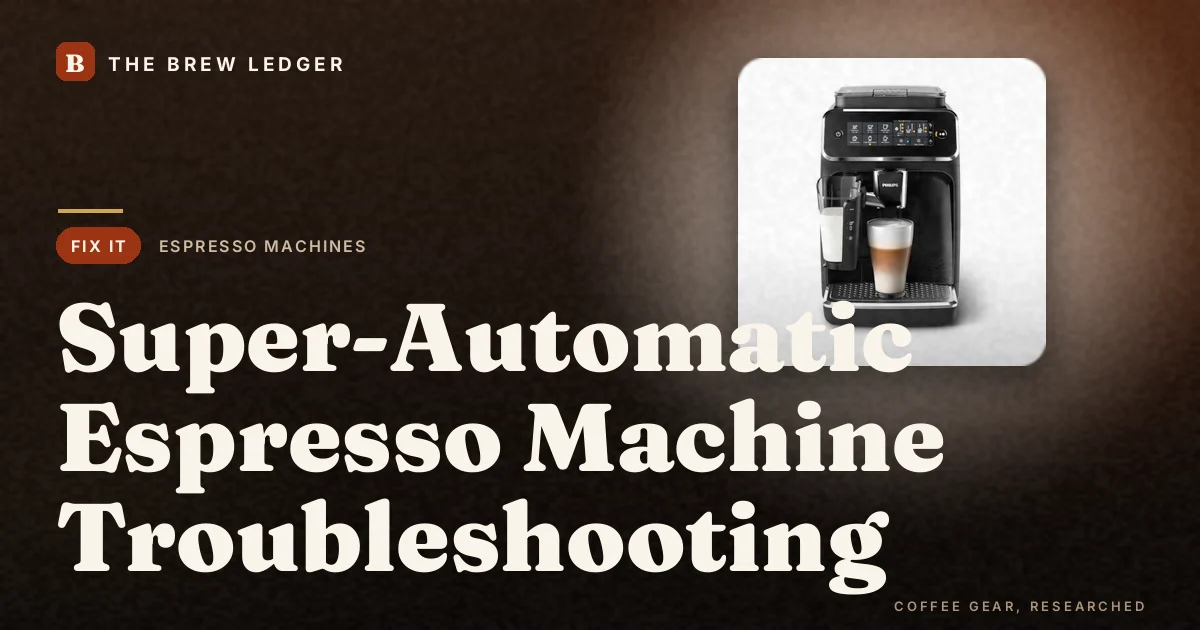
Super-automatics fail in predictable ways, and almost all of them trace to beans, cleaning, or water. Work through these fixes before assuming a mechanical fault; the machine is usually telling the truth about what it needs.
Coffee tastes weak or watery
First check the aroma strength setting; many machines ship on a mild default. Then grind finer by one or two steps, adjusting only while the grinder runs. Stale beans are the other classic cause: coffee more than two months off roast produces thin, lifeless shots no setting can fix. See our beans guide for what to buy.
Grinder jams or makes a strained noise
Oily dark-roast beans are the usual culprit: surface oils coat the burrs until they seize. Empty the hopper, vacuum out loose beans, and run the grinder briefly to clear residue. Switch to a medium roast going forward. Never put flavored beans through a super-auto grinder; the coatings gum the works rapidly.
Milk system produces no foam or weak foam
Use cold, fresh milk; warm or old milk froths poorly in any system. Then clean the milk path: dried milk residue in tubes or the LatteGo chamber blocks air intake, which is exactly what creates foam. Disassemble per the manual, soak the parts, and clear every air hole. If foam was fine and faded gradually, residue buildup is almost certainly the cause.
Machine constantly demands descaling
Hard water exhausts filters fast. If you use a filter like AquaClean or CLEARYL, confirm it is registered in the machine's settings; an unregistered filter means the machine counts water as unfiltered. Replace filters on schedule, not when you remember. Households with very hard water should consider filtered water in the tank regardless of built-in filtration.
Coffee is not hot enough
Raise the temperature setting; most machines offer two or three levels and ship in the middle. Preheat the cup with hot water from the machine's spout, since a cold ceramic cup steals several degrees. Milk drinks will always read cooler than black coffee because cold milk drops the temperature; that is physics, not a fault.
Brew group stuck or error message on screen
On machines with removable groups, power off, remove the drip tray and grounds container, then slide the brew group out, rinse it under warm water with no soap, let it dry, and reseat it firmly until it clicks. Most stuck-group errors come from coffee residue preventing full seating. On Jura machines with sealed groups, run the guided cleaning cycle with the proper tablet instead.
Questions, answered
How often should I run cleaning cycles?
Milk system: after every milk drink, without exception. Brew group rinse: weekly on removable-group machines. Automated cleaning and descaling: whenever the machine prompts, promptly; postponing prompts is how small problems become service calls.
Can I use vinegar to descale?
No. Use the descaler your manufacturer specifies. Vinegar can damage seals and sensors, leaves odors that taint coffee, and may void coverage. Proper descaler is cheap compared to a service repair.
Why does the machine use so much water on startup?
The rinse cycle flushes the brew circuit and heats the system; it is normal and necessary for taste and hygiene. Machines with larger boilers use more. You can capture the rinse water for plants rather than wasting it.
When should I call for service instead of troubleshooting?
When the pump runs with no water flow after descaling, the grinder jams on fresh medium-roast beans, or error messages persist after the proper cleaning cycle. Document what you tried; service centers diagnose faster with a clear history.