Fix it
Pour Over Troubleshooting: Sour, Bitter, and Stalled Brews
Fix common pour over problems: sour under-extraction, bitter over-extraction, channeling, drawdown too fast or too slow.
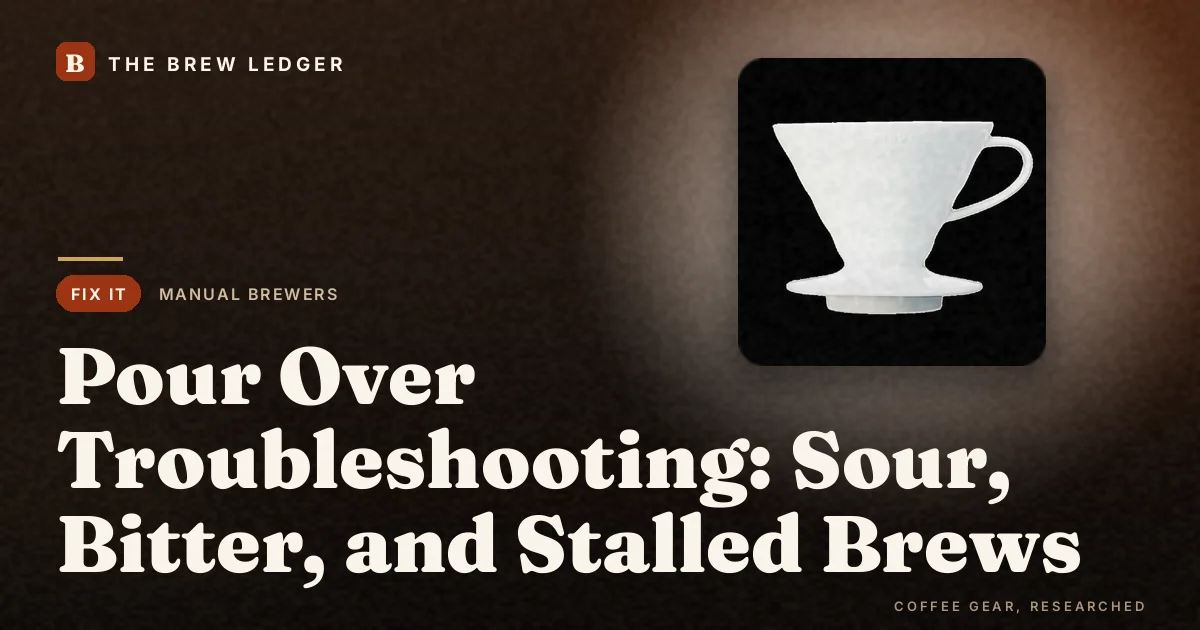
Nearly every pour-over problem is under-extraction or over-extraction wearing a disguise. Sour, salty, or thin means under-extracted; bitter, harsh, or drying means over-extracted. Diagnose which one you taste, then adjust one variable at a time: grind size first, then temperature, then pour technique.
Coffee tastes sour or salty
Classic under-extraction: water did not pull enough from the grounds. Grind finer first, the single most effective fix. Check water temperature: light roasts need near-boiling water. Make sure you bloom for 30 to 45 seconds so CO2 escapes before the main pour, and pour slower spirals to extend contact time.
Coffee tastes bitter or harsh
Over-extraction: too much pulled from the grounds. Grind coarser, lower water temperature a few degrees, especially with dark roasts, and shorten the drawdown with a faster, less agitated pour. If bitterness arrived suddenly with the same beans, your grinder may have drifted finer.
Drawdown is too fast and the bed looks flat
Fast drawdown with a flat bed usually means the grind is too coarse or the filter is not seated, letting water bypass the coffee. Grind finer, rinse and seat the filter fully against the dripper walls, and pour in the center-out spiral pattern instead of dumping water in one spot.
Drawdown stalls and the dripper chokes
A stalled brew means fines have clogged the filter, usually from grinding too fine or from a grinder producing excess dust. Grind coarser, avoid over-agitating the slurry, and swirl gently instead of stirring aggressively. With flat-bottom drippers like the Kalita, very fine grinds stall the three small holes specifically.
Channeling: one part of the bed is pale, the rest dark
Channeling is water tunneling through one path, over-extracting it and under-extracting everything else. On a V60 this comes from pouring too aggressively in one spot. Fix it with slow spiral pours starting from the center, a proper bloom, and a level coffee bed before the first pour. A gooseneck kettle is the real cure.
Cups are inconsistent day to day
Inconsistency is almost always measurement, not mystery. Weigh your coffee and water every time: eyeballing dose is the top cause of day-to-day variance. Keep grind setting, water temperature, and pour timing constant, and change only one variable when dialing in. A scale and a timer turn luck into routine.
Questions, answered
Sour or bitter: how do I tell which one I taste?
Sour is sharp, puckering, and thin, like under-ripe fruit. Bitter is harsh, drying, and heavy, like over-steeped tea. Sour means grind finer or go hotter; bitter means grind coarser or go cooler.
How long should a V60 drawdown take?
Roughly 2:30 to 3:30 for a standard 1 to 2 cup brew including the bloom. Much faster suggests too coarse a grind; much slower suggests too fine or a clogged filter.
Does the bloom really matter?
Yes, especially with fresh coffee: the 30 to 45 second bloom releases CO2 that would otherwise block extraction and cause unevenness. Skipping it is the most common beginner shortcut and a frequent sour-cup culprit.
Why does my coffee taste fine but look muddy?
Excess fines in the grind, common with blade grinders and worn burrs. A burr grinder upgrade fixes it; paper filters can only trap so much. Mesh-filter brewers like the Bodum produce sediment by design.