Buying guide
Pour Over Coffee Buying Guide: Dripper, Filters, and Kettle
How to build a pour over setup: dripper geometry, filter types, kettle control, grind and ratio basics, and the decision framework.
Start with our top 3


Dripper geometry decides the learning curve
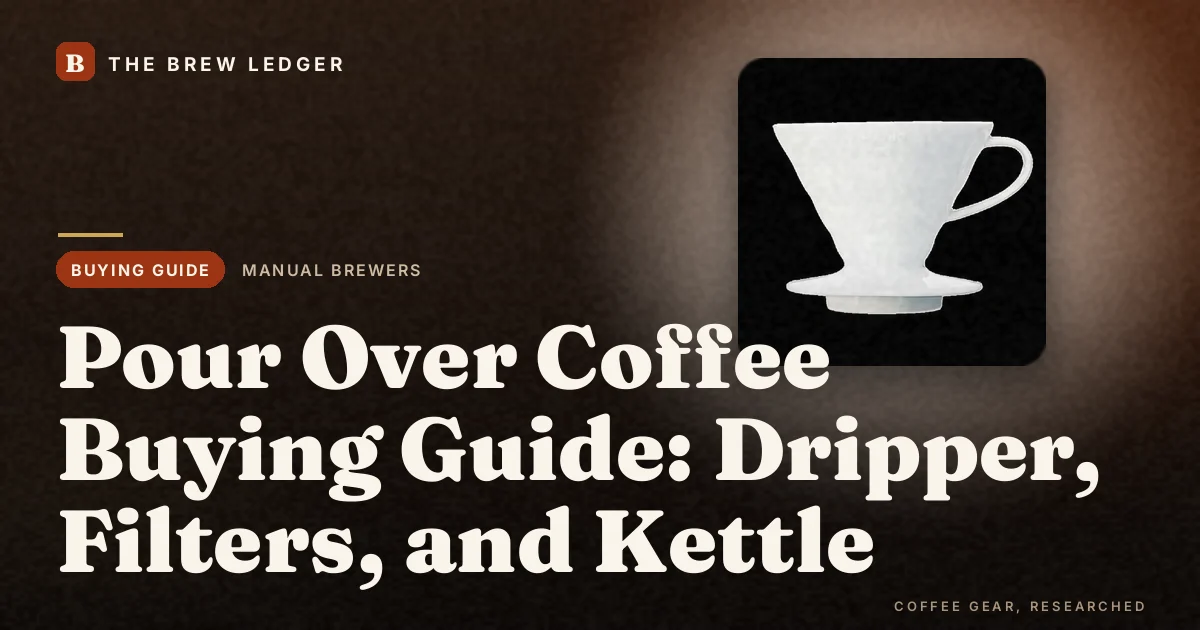
Cone drippers like the Hario V60 give maximum control and demand maximum skill: the deep bed and open drawdown reward precise pouring and punish sloppiness. Flat-bottom drippers like the Kalita Wave forgive imperfect technique with an even bed and restricted flow. Wedge drippers like the Melitta are the simplest of all but cap your ceiling. Beginners should start flat, students of the craft should start cone, and everyone should know which game they are playing. Our Chemex vs V60 comparison shows how geometry shapes the cup.
Filters shape flavor more than drippers do
Paper thickness is a flavor dial. Thin V60 papers preserve oils and brightness; thick Chemex bonded filters strip them for clarity; mesh filters like the Bodum's skip paper entirely for a heavy, sediment-rich cup. Filter cost is also an ownership cost: proprietary thick filters add up over daily use, while standard cones are cheap. Choose your filter philosophy first, since it constrains which dripper makes sense.
The kettle is half the equipment
A gooseneck kettle's narrow spout is what makes slow, controlled pouring possible, and variable temperature lets you match water to roast level: near boiling for light roasts, slightly cooler for dark. The Fellow Stagg EKG Pro is the full-featured pick, the Brewista Artisan the manual precision pick, and the COSORI the budget entry. Do not pair a V60 with a regular kettle and wonder why the cups disappoint. See the best pour over kettle ranking and the Fellow family breakdown.
Grind, ratio, and the scale you need
Two purchases matter as much as the dripper: a burr grinder and a gram scale. Pour over exposes grind inconsistency brutally, so a decent burr grinder outranks a fancy dripper. Start at a 1:16 coffee-to-water ratio (about 22 grams to 350 grams) and a medium-fine grind, then adjust by taste: sour means finer or hotter, bitter means coarser or cooler. The scale makes every cup repeatable; without it you are guessing.
Decision framework: buy it if, skip it if
Buy into pour over if: you enjoy ritual and are willing to practice, you want the clearest expression of good beans, and you will buy a grinder and scale. Skip it if: you want one-button mornings (buy a Moccamaster), you drink mostly milk drinks, or you will not maintain the technique; an unused V60 brews nothing. Start with the Kalita Wave for forgiveness, the V60 for the highest ceiling, the Chemex for groups, and the OXO set for a single beginner purchase. Our pour over set ranking covers the one-box options.
What to buy first, in order
First the grinder, because stale or inconsistent grounds waste every other purchase. Second the dripper and filters, matched to your skill ambition. Third the gooseneck kettle, because controlled pouring is non-negotiable for cone and flat-bottom drippers. Fourth the scale, because repeatability is what turns good cups into a good routine. Buy in this order and each purchase improves the last; buy a premium kettle first and a blade grinder and you have built the setup backwards.
Questions, answered
What is the cheapest good pour over setup?
A Melitta #2 or plastic V60, grocery-store filters, and any kettle you own gets you brewing for very little. The meaningful upgrades are a burr grinder first, then a gooseneck kettle like the COSORI.
Cone or flat-bottom for a beginner?
Flat-bottom: the Kalita Wave forgives the pouring errors every beginner makes. Move to a cone V60 once your pours are steady and you want more control.
How important is water temperature really?
Very for light roasts, moderately for medium, less for dark. Near-boiling extracts delicate light-roast flavors; slightly cooler water tames dark-roast bitterness. A variable kettle makes this adjustable instead of guesswork.
Paper, metal, or cloth filters?
Paper for clean and convenient, metal mesh for heavy and zero-cost, cloth for a middle ground that needs maintenance. Most brewers land on paper for daily use and keep it simple.