Head to head
Moka Pot vs French Press
Moka pot vs French press: pressure brewing vs immersion compared on strength, body, grind, cleanup, and cost, with the Moka Express and Milano Steel as reference picks.
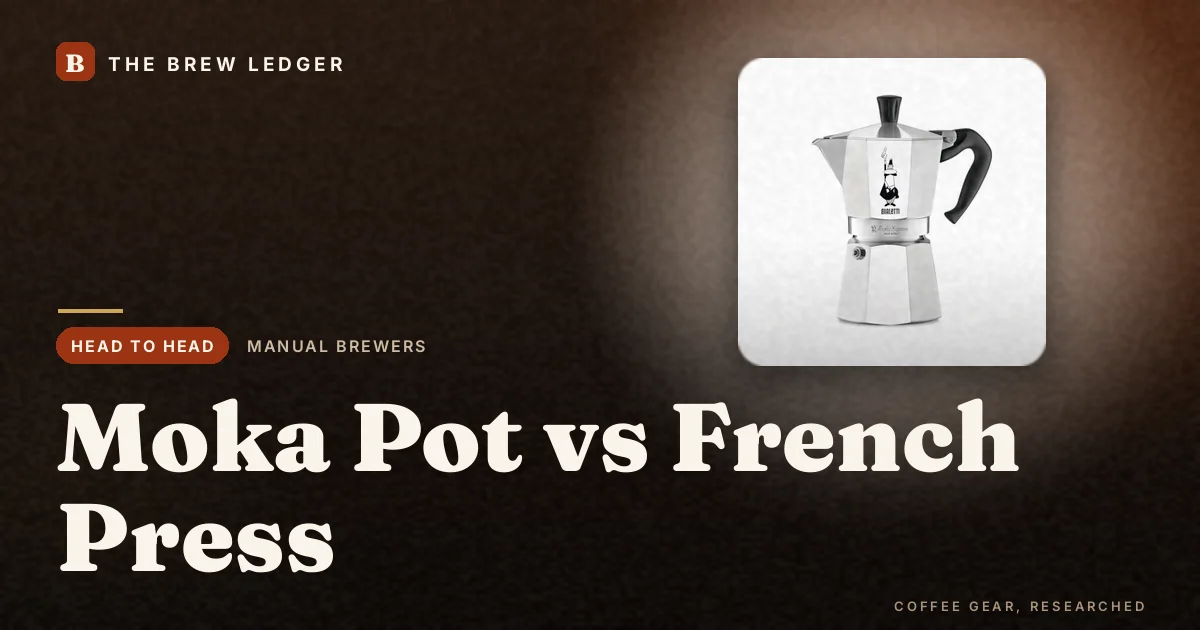

Bialetti Moka Express
The 1933 octagonal icon that defined stovetop coffee.
- Invented: 1933 by Alfonso Bialetti
- Body: Cast aluminum, octagonal
Sources: Bialetti official product specifications, Major retailer product listings, Published coffee gear reviews
Check current priceGROSCHE Milano Steel
A stainless steel moka pot at an aluminum price, with induction compatibility across five sizes.
- Material: Stainless steel
- Sizes: 3, 6, 9, and 10 cup
Sources: GROSCHE official product specifications, Major retailer product listings, Published coffee gear reviews
Check current priceBialetti Moka Express
What owners report
- Owners praise a design that has stayed in production since 1933, with the same octagonal aluminum shape
- Many owners like having seven sizes from 1 to 12 cups, covering solo drinkers through dinner parties
- Long-term owners say steam pressure does all the work, with no plunging, pouring technique, or filters to buy
- Some owners are frustrated that the aluminum body is not induction-compatible and needs hand washing
- Owners note brew strength is fixed by the design, leaving little room to experiment with recipes
- A common complaint is scorched coffee when the pot is left on the heat too long, a classic beginner mistake
GROSCHE Milano Steel
What owners report
- Owners praise getting full stainless steel construction that works on induction at a price below most steel rivals
- Many owners value the wide size range running from 3-cup up to 10-cup for different household sizes
- Owners appreciate the included safety valve and heat-resistant handle at this price point
- Some owners say the thinner steel walls retain heat only modestly compared with premium Italian-made pots
- A common complaint is that the fit and finish feel functional rather than refined
- Owners note the brand parts network is smaller than Bialetti's when something needs replacing
Our recommendation
Choose a moka pot like the Bialetti Moka Express if you want the strongest, most concentrated cup: pressure brewing extracts more intensity per ounce. Choose a French press if you prefer a fuller-bodied but less intense cup, simpler cleanup, and brewing for a crowd with no stovetop technique. The GROSCHE Milano Steel is the moka pick for induction households making the same decision. Our best moka pots guide covers the stovetop side in full.
Brew method and strength
Moka pots push water through coffee at about 1.5 bars of pressure, producing a concentrated, intense cup. French presses steep coarsely ground coffee in hot water for four minutes, producing a full-bodied but less intense brew. Ounce for ounce, moka coffee is significantly stronger.
Grind size
Moka pots need a medium-fine grind; French presses need a coarse grind. The coarse press grind is more forgiving of inconsistent grinders, while moka brewing punishes grind that is too fine with sputtering and bitterness. Beginners find the press easier to dial in.
Body and sediment
French press coffee has the heaviest body of any common method because the metal mesh lets oils and fine sediment through. Moka pot coffee is cleaner, the filter plate stops most sediment, but still rich. Choose silk versus weight: moka is intense and clean, press is mellow and heavy.
Capacity and batch size
French presses commonly brew 34 oz or more in one batch, ideal for households. Moka pots brew fixed volumes per size, a 6-cup makes about 10 oz, so serving four people means either a 9 or 12 cup pot or multiple batches. For crowds, the press wins on convenience.
Cleanup and technique
French press cleanup means scooping wet grounds from the beaker; moka pot cleanup is a quick rinse of three chambers. But the moka pot demands heat management, too high and the coffee scorches, while the press just needs a timer. Technique versus mess: pick your trade.
Choose Bialetti Moka Express if…
- You want the strongest cup per ounce and drink your coffee black or with a splash of milk.
- You brew for one or two people and the 6-cup Moka Express's 10 oz batch fits.
- You enjoy the stovetop ritual and do not mind managing heat.
Choose GROSCHE Milano Steel if…
- You cook on induction and want the moka method in stainless steel: the Milano Steel works on every cooktop.
- You prefer flavor-neutral steel that never affects taste over long ownership.
- You want Bialetti-adjacent brewing geometry at a lower steel price point.
Questions, answered
Which makes stronger coffee, moka pot or French press?
The moka pot, by a clear margin. Pressure extraction at 1.5 bars produces a more concentrated brew than four-minute immersion. If intensity is the goal, the moka pot wins.
Which is easier for beginners?
The French press. Coarse grind, hot water, four minutes, plunge: there is almost nothing to get wrong. Moka pots require grind, fill, and heat management, though the routine becomes second nature quickly.
Can I make lattes with either?
Moka coffee's intensity stands up to milk better, making it the closer approximation of an espresso-based milk drink. French press coffee gets diluted and milky faster. Neither steams milk, so heat your milk separately.
Which is cheaper?
Both are inexpensive as brew methods go. Quality French presses and moka pots sit in the same budget-to-mid price band, so decide on taste and routine rather than cost. Our moka pot buying guide covers sizing if you go the stovetop route.