Fix it
Moccamaster Troubleshooting: Descaling, Overflow, and Weak Coffee
Fix the most common Moccamaster problems: brew basket overflow, weak or bitter coffee, slow brewing, and descaling the copper element.
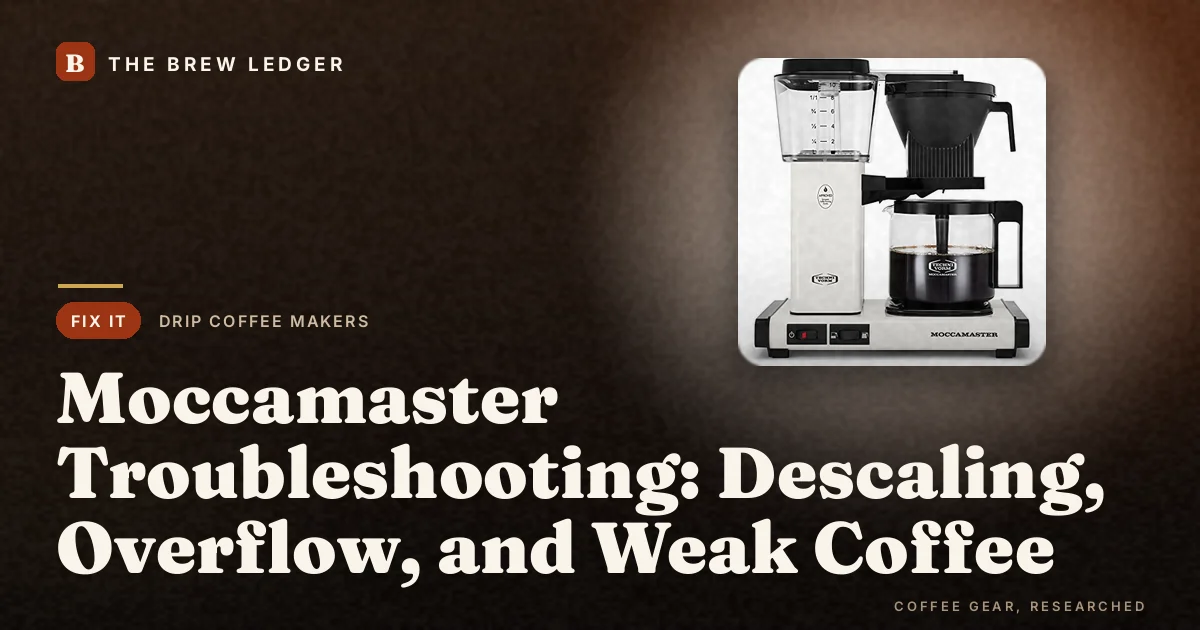
Moccamasters are simple machines, which means most problems have simple causes: scale buildup, grind size, or filter issues. Work through these fixes in order before assuming a hardware fault; the copper element and brew assembly rarely fail, but scale and technique fail constantly.
Brew basket overflows during brewing
Overflow is almost always a grind or filter issue. Use a medium grind, not fine: fine grounds clog the #4 filter and back up the basket. Check that the filter is seated flat with no folds channeling water down the sides. If you use the manual drip-stop, make sure it is fully open during brewing; a partially closed stop restricts flow and floods the basket.
Coffee tastes weak or watery
Weak coffee means under-extraction. First check your ratio: 1.25 liters needs roughly 70 to 75 grams of coffee. Next, check grind: too coarse and water races through without extracting. If you brew half batches on a KBG without the selector switch, the faster cycle under-extracts; the KBGV Select's half-carafe setting exists for exactly this.
Coffee tastes bitter or harsh
Bitterness usually means over-extraction or cooked coffee. Grind coarser first. If the pot sits on the hotplate, the bitterness comes from continued cooking, not extraction: drink within 30 minutes or switch to the thermal-carafe KBGT. Stale dark-roast beans also read as bitter regardless of technique.
Brewing is slow or the machine gurgles
Slow brewing with gurgling is the classic scale symptom. Descale with a proper citric-acid descaler, not vinegar, running a full cycle and then two rinse cycles. In hard-water areas, descale every one to three months; scale insulates the copper element and strangles flow. If descaling does not restore speed, check the 9-hole outlet arm for clogs.
Machine does not turn on or shuts off mid-brew
Check the obvious first: outlet, power switch position, and that the carafe is seated correctly. Moccamasters have a thermal fuse that trips on severe overheating, usually from running dry or extreme scale. If the fuse has blown, it needs replacement: the parts are available and the repair is straightforward, which is exactly what the five-year warranty and parts support are for.
Water leaks from the base or brew basket
Basket leaks usually mean a mis-seated filter or a cracked brew basket; inspect the basket for hairline cracks and replace if damaged. Base leaks after years of service can come from perished seals in the water path. Both are replaceable parts rather than machine-ending failures, so contact Technivorm support or a parts retailer instead of replacing the brewer.
Questions, answered
How often should I descale my Moccamaster?
Every one to three months depending on water hardness. If brewing slows, gurgling increases, or coffee tastes flat, you are overdue. Use a citric-acid descaler and run two plain-water rinse cycles after.
Can I use vinegar to descale?
Technivorm recommends against it: vinegar can damage seals and leaves odors that take many rinses to clear. A dedicated descaler is cheaper than a seal replacement.
Why does my Moccamaster brew slower than it used to?
Scale buildup on the copper element and in the water path, in nearly every case. Descale thoroughly. If speed does not return, check the outlet arm holes for mineral clogs.
The coffee was great for a year and now tastes off. What changed?
Scale, almost certainly, if you have not descaled. Otherwise check your beans: coffee goes stale, grinders drift coarser as burrs wear, and water filters exhaust. The machine is the last suspect, not the first.