Fix it
French Press Troubleshooting: Fix Sludge, Bitterness, and Weak Brews
Fix the most common French press problems: sludge, bitter or weak coffee, fast cooling, hard plunging, and broken beakers.
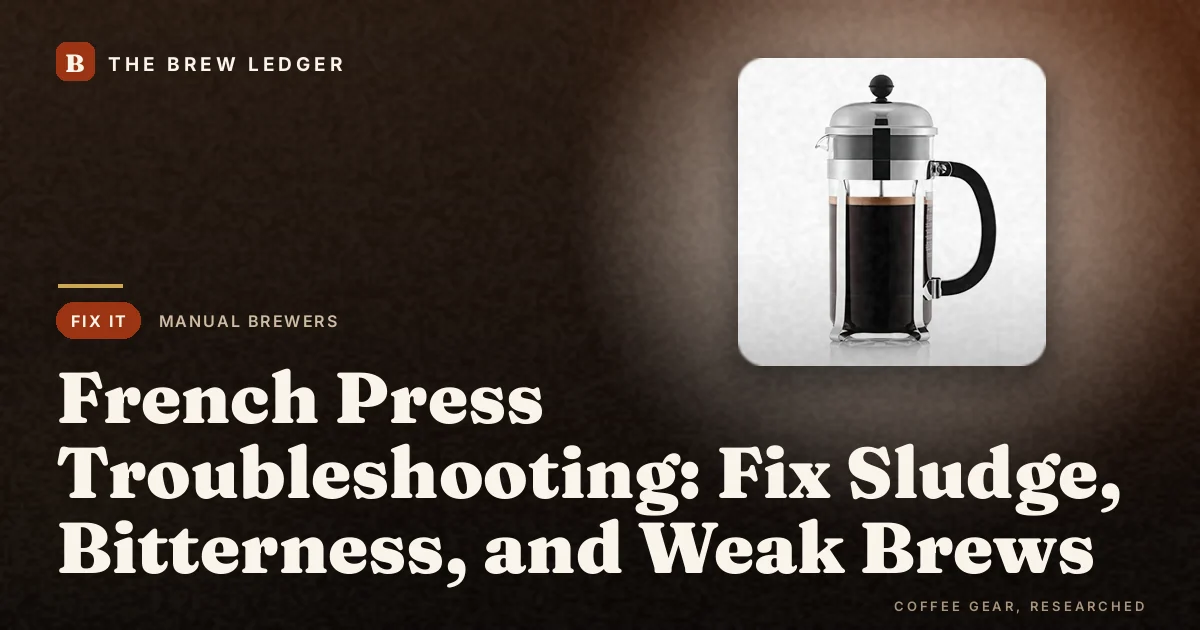
French press problems almost always come from grind size, steep time, or serving speed. Sludge means the grind is too fine or uneven; bitterness means over-extraction; weak coffee means under-extraction; lukewarm coffee means the beaker was not preheated or you need insulated steel. Fix one variable at a time.
Lots of sludge in the cup
Grind coarser and more evenly; a burr grinder is the real fix, since blade grinders produce the fines that become sludge. Skim the foam and floating grounds before plunging, plunge slowly, and stop pouring before the last half-inch. For a structural fix, a double-filtered press like the Espro P7 or P3 strains out far more sediment by design.
Coffee tastes bitter and harsh
Over-extraction. Shorten the steep below 4 minutes, coarsen the grind, or use water just off boil rather than a rolling boil. Most importantly, pour all the coffee out immediately after plunging; coffee sitting on the grounds keeps extracting and the last cup turns harsh.
Coffee tastes weak or thin
Under-extraction. Use more coffee (work toward a 1:15 ratio, about 60 g per liter), grind slightly finer, or use hotter water. Also check that you are filling the press near-full; a half-filled large press brews weakly.
Coffee cools too fast
Preheat the beaker with hot water before brewing, which buys several minutes. Serve immediately after plunging rather than letting the pot sit. If slow sipping is your habit, switch to a vacuum-insulated press like the Espro P7, Bodum Columbia, or Stanley Classic, which hold heat for hours instead of minutes.
The plunger is hard to press or grounds squirt up
The grind is too fine, creating a compacted bed that resists the filter. Coarsen the grind and plunge slowly and vertically; never force it. Check that the filter screen is not clogged with old fines, and disassemble and clean the 3-part filter if drawdown has gotten worse over time.
The glass beaker broke
Replacement beakers are sold for all major brands (Bodum's parts availability is excellent) and swap in within a minute; match your press's exact size. To prevent repeats: avoid thermal shock (no cold water into a hot beaker), do not stir with metal that can nick the glass, and consider a steel press like the Mueller Austria or Secura if breakage keeps happening.
Questions, answered
Why does my French press coffee taste muddy?
Muddiness is fine sediment plus over-extraction of those fines. Coarsen and even out the grind, skim before plunging, and do not plunge to the very bottom. A double micro-filter press eliminates most of it mechanically.
Should I stir the crust?
A gentle stir after pouring ensures all grounds are wet, which aids even extraction. Breaking the crust at 4 minutes and skimming the foam also reduces sediment. Stir gently; aggressive agitation increases bitterness.
Can I reheat French press coffee?
You can, but it will taste stewed: the delicate aromatics are gone and bitterness increases. Brew only what you will drink, or move to an insulated press that keeps the batch hot without reheating.
How do I clean coffee oil buildup?
Disassemble the filter and soak all parts in hot water with a spoonful of baking soda or a dedicated coffee cleaner, then scrub with a non-abrasive brush. Oily buildup turns rancid and is a common cause of stale-tasting press coffee.