In-depth review
Espro P7 Review
In-depth Espro P7 review: the double micro-filter, vacuum insulation, 32 oz capacity, and whether the premium is worth it.
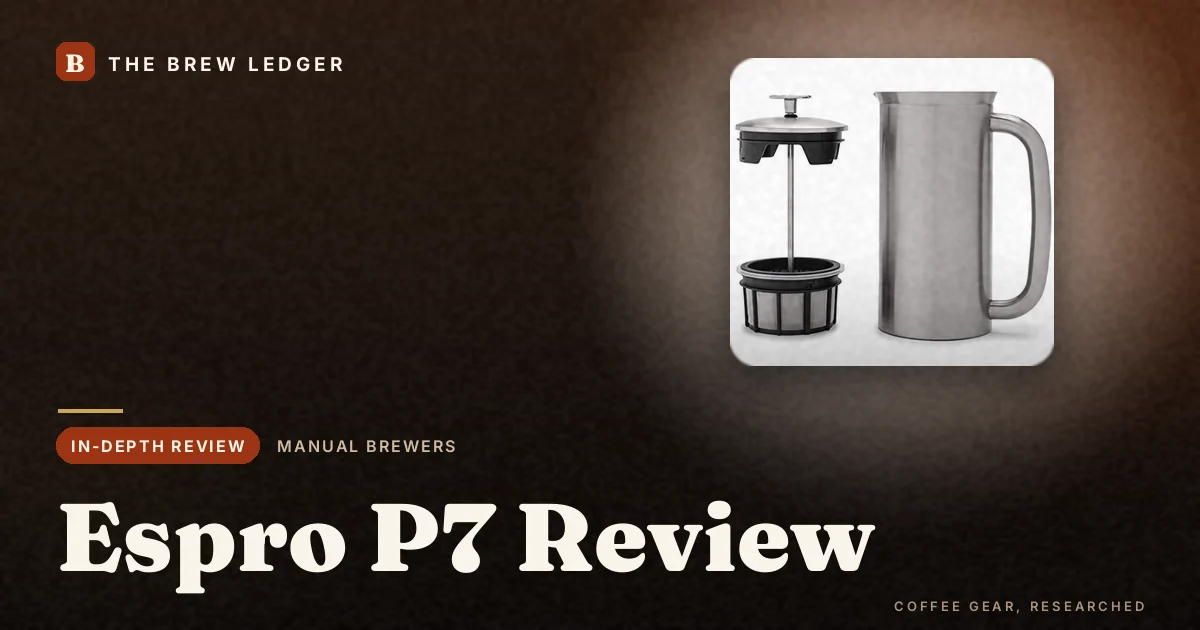

Espro P7
The double-filtered, vacuum-insulated press that brews the cleanest French press cup.
- Capacity: 32 oz (1 liter)
- Filtration: Patented double micro-filter
- Body: Double-wall vacuum-insulated stainless steel
Our verdict
The P7 is the French press for people who love the method but hate its flaws. The patented double micro-filter strips out the sludge, the design halts extraction so the last cup is not bitter, and the vacuum-insulated 32 oz steel body keeps coffee hot for hours. The price is a multiple of a basic press, and you cannot watch the brew. If sediment and lukewarm second cups are why you drifted from French press, this is the press that brings you back. Compare the method against pour-over in French press vs Chemex, or browse best French press picks for the full ranking.
What we like
- Patented double micro-filter (two fine baskets) strains out far more sediment
- Double-wall vacuum-insulated stainless steel keeps coffee hot for hours
- 32 oz (1 liter) capacity suits 2 to 4 mugs
- Filter design stops extraction, so the last cup is not overbrewed
What to watch out for
- Premium price, multiples of a basic glass press
- Heavier than glass presses at the same capacity
- You cannot watch the brew through steel walls
Who it is for
French press loyalists who want the cleanest possible cup and coffee that stays hot.
The double micro-filter
Two nested fine-mesh baskets replace the single screen, and the difference is visible: the cup pours clearer with far less silt, and the filter assembly seals against the beaker wall so grounds cannot sneak around the edges. It is the single biggest filtration upgrade in this guide, and the reason the P7 costs what it does.
Extraction stops at the plunge
In a basic press, coffee left in the beaker keeps extracting and turns bitter. The P7's filter design isolates the grounds below the poured coffee after plunging, so a half-full pot does not punish you for lingering. This matters most for slow drinkers and households where the pot sits between cups.
Insulation and capacity
The double-wall vacuum-insulated 18/8 steel body keeps coffee hot for hours, not minutes. At 32 oz (1 liter) it serves 2 to 4 mugs, the sweet spot for couples and small households. The steel adds weight versus glass, and you lose the visual feedback of watching the steep.
How it stacks up
Against the Bodum Chambord (34 oz glass, 3-part single filter, four sizes), the P7's double micro-filter produces a cleaner cup and its vacuum steel holds heat for hours where the Chambord cools in 20 minutes; the Chambord costs far less and shows the brew. Against the Frieling Double-Walled (36 oz, 18/8 double-wall steel, mirror finish), both are premium insulated steel presses, but the Frieling uses a conventional fine-mesh filter while the P7's patented double basket filters finer and halts extraction; the Frieling counters with a slightly larger capacity and a lower price.
Key specifications
- Capacity
- 32 oz (1 liter)
- Filtration
- Patented double micro-filter
- Body
- Double-wall vacuum-insulated stainless steel
- Effect
- Stops extraction after plunging
- Heat retention
- Keeps coffee hot for hours
Sources: Espro official product specifications, Major retailer product listings, Published coffee gear reviews
What owners report
Owners praise
- Owners praise the twin micro-filter baskets for pouring a noticeably cleaner cup than a standard single screen
- Long-term owners say the vacuum-insulated steel body keeps a morning pot hot for hours instead of minutes
- Many owners like that the filter halts brewing after the plunge, so the last cup poured tastes like the first
Common complaints
- Some owners balk at paying several times the price of a basic glass press for the filtration upgrade
- Owners note the steel body adds real heft compared with glass presses of similar size
- A common complaint is losing the visual check on the steep because the walls are opaque steel
Also consider
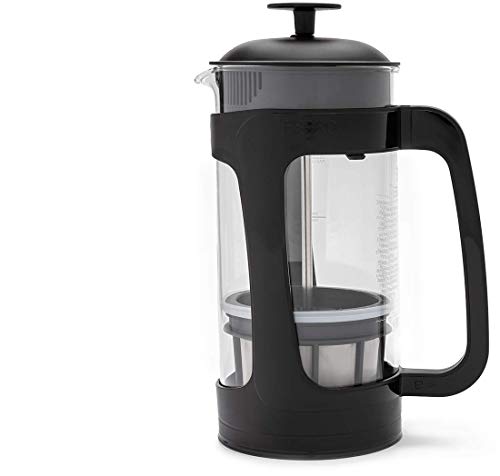
Espro P3
Espro's double micro-filter in a glass body for less than the vacuum-insulated P7.
- Capacity: 32 oz
- Filtration: Patented double micro-filter
Sources: Espro official product specifications, Major retailer product listings, Published coffee gear reviews
Check current price
Bodum Chambord
The chrome-and-glass French press design that has defined the category since the 1950s.
- Design: Iconic French press, dating to the 1950s
- Beaker: Borosilicate glass
Sources: Bodum official product specifications, Major retailer product listings, Published coffee gear reviews
Check current priceResearch-based assessment. TheBrewLedger has not hands-on tested this product; this evaluation synthesizes manufacturer specifications, retailer documentation, and published expert reviews.
Questions, answered
Is the Espro P7 worth the premium?
If sludge and heat loss bother you, yes: no other press fixes both as completely. If you are happy with a classic press cup and drink it promptly, the Chambord or Brazil deliver 80 percent of the experience for far less.
How do you clean the double filter?
Disassemble the two baskets and rinse; the design comes apart without tools. A periodic soak in cleaner removes oil buildup that can slow drawdown. Avoid abrasive scrubbers on the fine mesh.
Can the P7 keep coffee hot all morning?
For hours, yes, though piping-hot-all-morning is optimistic for any press once opened and poured from. Preheat the press with hot water before brewing to maximize retention.
P7 vs P3: which Espro?
Same filter, different body. The P7's vacuum steel holds heat for hours; the P3's glass cools in minutes but costs less and shows the brew. Choose by whether heat retention justifies the price gap for you.