Fix it
Espresso Grinder Troubleshooting: Channeling, Clogs, and Shot Inconsistency
Fix common espresso grinder problems: inconsistent shots, clogged chutes, static, retention, and dialing difficulties.
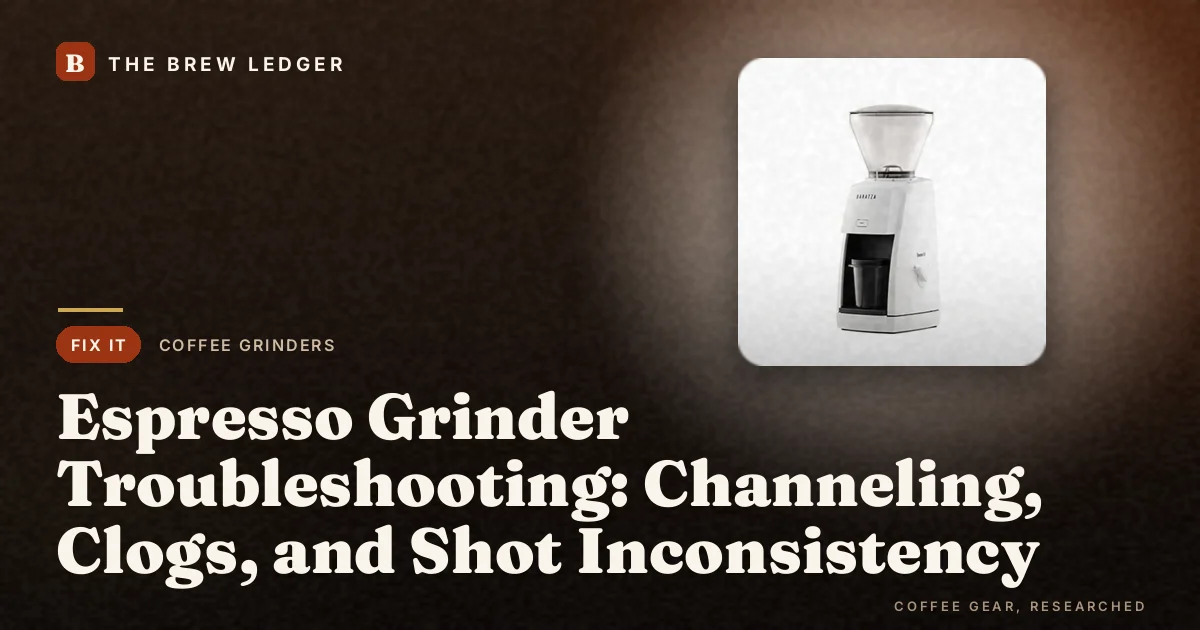
Espresso magnifies every grinder flaw because the margin for error is microns wide. Most problems trace to retention, static, or a grind setting that drifted. Work through these fixes with the grinder unplugged before opening anything.
Shots run inconsistently from one to the next
Purge 2 to 3 grams before the first shot of the day to clear retained grounds, then weigh every dose on a 0.1 g scale. If inconsistency persists, check that the adjustment mechanism has not slipped: on stepped grinders confirm the detent is seated, on stepless grinders mark your setting and verify it has not drifted.
Shots channel and spray despite good puck prep
Excess fines cause channeling. Clean the burrs, since caked fines break loose unevenly, and check for a chipped burr edge. If the grinder is new, season the burrs with a pound of cheap beans; fresh burrs produce more fines until broken in.
Grounds clump badly in the portafilter
Static and fine grinding cause clumping. Use the Ross droplet technique: mist beans lightly before grinding. Grind into a dosing cup and shake to break clumps, then use a WDT tool to distribute. Grinders with anti-clump screens, like the Specialita, reduce this by design.
Grinder chokes or jams on fine settings
Unplug, remove the hopper, and clear the burr chamber with a brush. Always adjust finer while the grinder is running with beans loaded; adjusting finer while off packs beans between the burrs. Oily dark roasts jam more often, so clean the chute frequently if you brew them.
Cannot dial in: shots jump from sour to bitter with no sweet spot
Your steps are too coarse for the coffee. This is the classic sign you have outgrown a stepped grinder: the ideal setting falls between clicks. A stepless grinder or a finer-stepped hand grinder like the JX-Pro resolves it. As a stopgap, adjust dose weight slightly to compensate between steps.
Grind setting drifts during grinding
Vibration can walk a loose adjustment ring, especially on stepless grinders. Check that the adjustment collar or dial locks firmly; some designs need the bean weight in the hopper to stay seated. If drift persists, the detent spring or threads may be worn and need service.
Questions, answered
How often should I clean my espresso grinder?
Brush the burr chamber weekly and deep-clean monthly with daily use. Oily beans demand more frequent cleaning. Use dry brushes or cleaning tablets, never water on the burrs.
Should I single-dose or use the hopper?
Single-dose if you switch beans or brew small amounts; the hopper if you run one bean daily. Either way, purge retained grounds before the first shot. The grind-by-weight guide compares dosing workflows.
Why do my shots taste different in the morning?
Retained grounds from yesterday go stale overnight and land in your first dose. Purge 2 to 3 grams before the first shot, every day, on any hopper grinder.
When do burrs need replacing?
Home espresso burrs last for hundreds of pounds of coffee. Signs of wear are more fines, a coarser effective grind, and shots that will not dial in. Replacement burr sets are available for most grinders in this guide.