Fix it
Espresso Extraction Troubleshooting: Sour, Bitter, and No-Crema Fixes
Fix bad espresso shots: sour under-extraction, bitter over-extraction, channeling, no crema, choked machines, and watery shots, with causes and fixes.
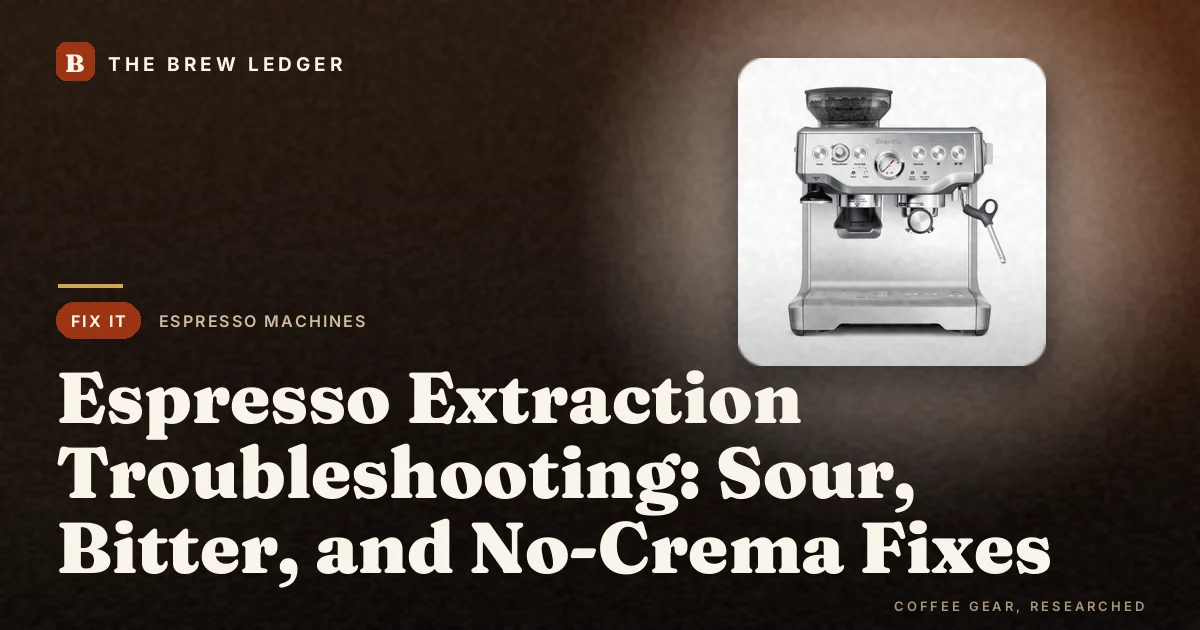
Bad espresso is almost always an extraction problem, and extraction problems have physical causes: grind size, dose, distribution, temperature, or pressure. Work through these fixes in order, changing one variable at a time. A scale that measures your dose and yield removes most of the guesswork.
Shot tastes sour or sharp
Sourness means under-extraction: water passed through too fast to pull out the sweet compounds. Grind finer, increase the dose slightly, or raise the brew temperature if your machine allows it. On the Barista Express, move the 16-setting grinder one or two steps finer and keep everything else constant.
Shot tastes bitter or ashy
Bitterness means over-extraction: too much dissolved from the grounds. Grind coarser, reduce the dose, or shorten the shot by stopping it earlier. Dark roasts over-extract easily, so they usually want a coarser grind than medium roasts on the same machine.
No crema on the shot
Crema needs fresh coffee, fine grind, and full pressure. Stale beans are the top cause: coffee more than a few weeks off roast loses the CO2 that forms crema. Next check the grind is fine enough and the machine reached full brewing temperature before pulling. Pressurized baskets like the Stilosa's fake crema with fresh or stale coffee alike, which is why their shots look better than they taste.
Channeling: blond spurting from the portafilter
Channeling happens when water finds cracks in the puck and rushes through them, seen as pale jets spurting from the portafilter. Fix distribution: break up clumps, level the grounds before tamping, and tamp flat with even pressure. A distribution tool helps more than tamping harder.
Machine chokes: no flow or drips only
The grind is too fine or the basket is overdosed for the pump to push through. Grind coarser one step at a time until flow starts, or reduce the dose by a gram. If it chokes suddenly after working fine, the grinder may have drifted finer or the beans changed; recalibrate rather than forcing it.
Shot runs watery and pale
Watery shots come from too coarse a grind, too small a dose, or stopping the extraction too late into blonding. Tighten the grind, confirm the dose fills the basket properly, and stop the shot when the stream turns pale yellow rather than letting it run. On super-autos like the Magnifica Evo, increase the strength setting and check the 13-setting grinder has not drifted coarse.
Questions, answered
How do I know if my grind is right?
Time the shot: with the right dose, espresso should flow like warm honey and finish in roughly 25 to 30 seconds. Faster means grind finer; slower means grind coarser. Taste confirms: sour needs finer, bitter needs coarser.
Why do my shots vary day to day?
Beans age and humidity changes shift extraction daily. Coffee degasses as it ages, flowing faster over the first two weeks off roast. Small grinder adjustments, not recipe overhauls, handle normal drift.
Does water quality affect espresso?
Yes. Very hard water scales the machine and mutes flavor; distilled water with no minerals extracts flatly and can damage sensors. Filtered tap water with moderate mineral content is the practical target, and it slows scale buildup.
When is it the machine, not me?
When technique is consistent and shots stay bad: pressure loss, scale-blocked thermoblocks, or worn gaskets show as weak flow, temperature swings, or leaks around the portafilter. Descale first; if problems persist after descaling with correct technique, the machine needs service.