Fix it
Drip Coffee Maker Troubleshooting: Weak Coffee, Slow Brews, and Keep-Warm Problems
Fix common drip coffee maker problems: weak or bitter coffee, slow brewing, keep-warm plate issues, and machines that will not start.
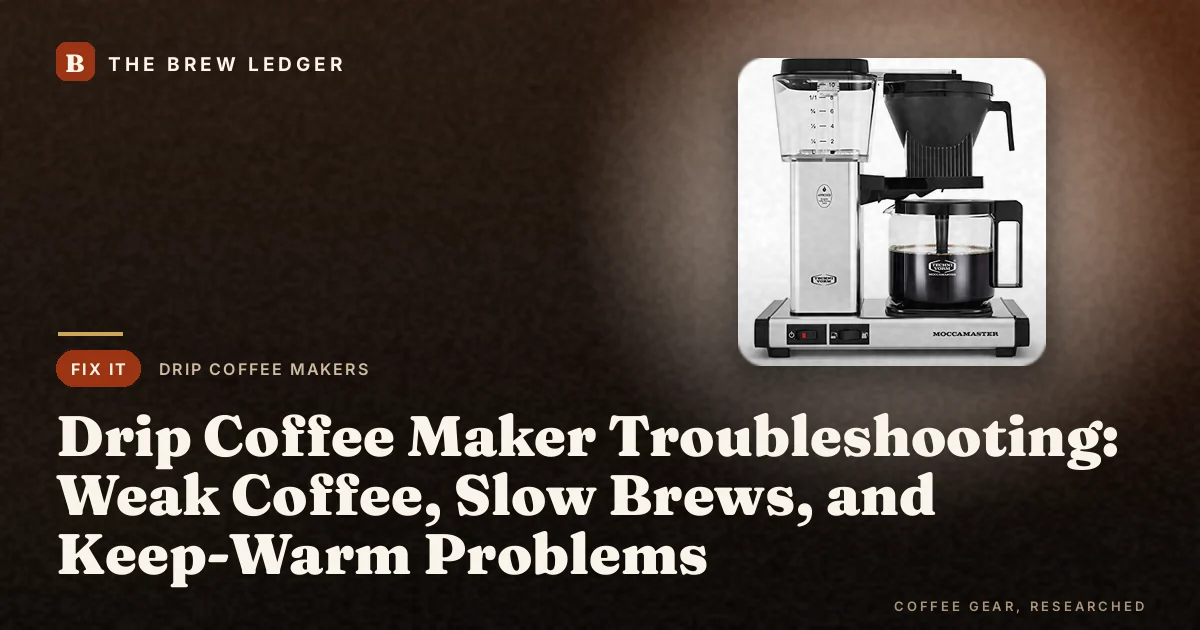
Most drip machine problems trace to three causes: mineral scale in the heating system, coffee oils in the brew path, or a mismatch between grind, dose, and batch size. Work through these fixes before replacing the machine.
Coffee tastes weak or watery
First check dose: the standard ratio is about 1 to 2 tablespoons of ground coffee per 6 oz of water, and under-dosing is the most common cause. Next check grind: too coarse a grind under-extracts in drip's short contact time. If dose and grind are right, descale the machine; scale insulates the heater so water never reaches proper temperature, the classic cause of mysteriously weakening coffee over months.
Coffee tastes bitter or harsh
Bitterness usually means over-extraction: grind too fine, too much coffee, or water too hot. Coarsen the grind one step and verify dose. If the machine has a bold/strong setting, switch it off. Stale beans also taste harsh and bitter regardless of technique, so check the roast date before blaming the machine.
Brewing is slow or the basket overflows
Slow brewing with overflow almost always means the grind is too fine for the filter, creating a clogged bed. Coarsen the grind. Also check that the filter is seated properly and you are using the right filter size; a collapsed filter channels water around the grounds. Persistent slowness despite correct grind signals scale in the water path, time to descale.
Coffee tastes burnt after sitting on the warmer
Hot plates scorch coffee within about 30 minutes; this is physics, not a defect. Drink within 30 minutes, use the lowest keep-warm setting, or transfer coffee to a thermal carafe immediately after brewing. If your routine needs hours of hot coffee, a thermal-carafe brewer is the real fix, not a better hot plate.
Machine brews lukewarm coffee
Lukewarm output means the heater is failing or scaled. Descale first: run a full descaling cycle per the manufacturer's instructions. If temperature does not recover, the heating element is likely dying, which on most machines means replacement rather than repair. Preheat ceramic mugs too; a cold mug can drop perceived temperature significantly.
Machine will not start or the clock resets
Check the obvious first: the carafe must be fully seated to engage the brew-pause valve, and the lid must be closed. Try a different outlet to rule out a tripped GFCI, common in kitchens. If the clock resets, the machine lost power; some models need the clock set before the programmable timer will run. No lights at all after these checks usually means a failed thermal fuse, a repair-shop job.
Questions, answered
How do I descale my coffee maker?
Fill the reservoir with a descaling solution or equal parts white vinegar and water, run a full brew cycle, pause halfway for 30 minutes to soak, then run two full cycles of clean water. Repeat every 1 to 3 months depending on water hardness.
Why does my coffee taste worse than when the machine was new?
Almost certainly scale buildup lowering brew temperature, plus rancid coffee oils in the brew basket and carafe. A full descale and a thorough cleaning of all removable parts restores most of the original performance.
Can I leave the keep-warm plate on all day?
You can, but the coffee will taste burnt within the hour and the plate wastes energy. Transfer to a thermal carafe or brew smaller, fresher batches instead.
My machine gurgles and steams but barely drips. What is wrong?
Severe scale is blocking the water path or the heater is failing. Run two consecutive descaling cycles. If flow does not improve, the machine has reached end of life.