Buying guide
Drip Coffee Maker Buying Guide
How to choose a drip coffee maker: SCA certification, brew temperature, thermal vs glass carafes, capacity sizing, and a decision framework.
Start with our top 3


SCA certification: what it proves
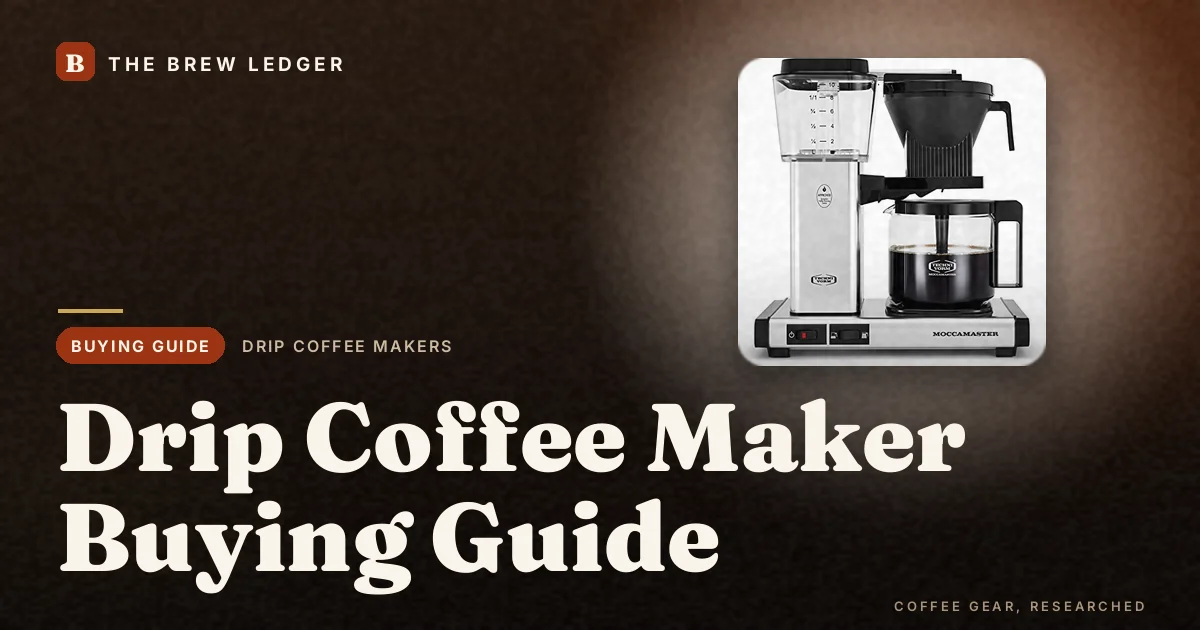
The Specialty Coffee Association certifies brewers that hold 195-205 degree water temperature, complete brewing in the proper time window, and meet extraction uniformity standards. Certified models in this guide include the Technivorm Moccamaster, OXO Brew 9-Cup, Bonavita BV1900TS, and Breville Precision Brewer. Certification is the single most reliable predictor of good coffee from a drip machine; non-certified machines can still satisfy, but you are trusting the manufacturer's word.
Temperature stability: the hidden spec
Water below 195 degrees under-extracts, producing sour, thin coffee; above 205 it over-extracts into bitterness. Cheap machines often start hot and fade, or never reach range at all. Look for published temperature specs and certification rather than wattage alone, though higher wattage (like the Bonavita's 1500 watts) generally means faster recovery and more stable brewing.
Carafe types: thermal vs glass
Thermal carafes (double-wall vacuum-insulated) keep coffee hot for hours with no continued heating, preserving flavor. Glass carafes sit on hot plates that scorch coffee within 30 minutes. Unless you always drink immediately, thermal is the better system; see our thermal carafe coffee maker picks for the best options. Glass wins only on price and pour visibility.
Capacity: size for your real routine
A coffee-maker cup is 5 oz, so a 12-cup machine brews 60 oz, about four standard mugs. Size for your largest regular batch: small batches in big machines brew less evenly. Entertainers and offices should look at 12 to 14 cups; couples at 8 to 9. Travelers with tight counters should read our RV coffee maker guide, and budget buyers our under-100 picks.
Features worth paying for (and skipping)
Worth it: programmability if you wake to coffee, brew-strength control if household tastes differ, and thermal carafes for slow drinkers. Skippable: built-in grinders (they grind poorly and complicate cleaning), WiFi connectivity (a timer does the same job), and gold-tone permanent filters if you prefer paper's cleaner cup. Pay for what changes your mornings, not the spec sheet.
Decision framework: which drip maker should you buy?
Buy SCA-certified if: you drink black coffee and taste extraction differences; you want the safest quality bet; the budget stretches to mid-range or premium. Buy a budget programmable machine if: coffee is caffeine with milk; programmability matters more than extraction; the household burns through pots. Buy thermal carafe if: coffee sits longer than 30 minutes; you hate scorched flavors. Consider single-serve instead if: you brew one cup at a time at scattered hours; see our Keurig vs drip comparison for the honest math.
Questions, answered
How much should I spend on a drip coffee maker?
Budget machines cover basic programmable brewing. Mid-range adds features and capacity. Premium buys SCA certification and thermal carafes, which is where measurable brew quality lives.
Do I need a grinder too?
Freshly ground beans improve any drip machine more than upgrading the machine itself. A basic burr grinder is the highest-value upgrade in coffee; pre-ground coffee goes stale within days of opening.
How often should I descale?
Every 1 to 3 months depending on water hardness. Mineral buildup slows brewing, drops temperature, and eventually kills the heating element. White vinegar or a commercial descaler both work; run two clean-water cycles after.
Paper filters or permanent filters?
Paper filters produce a cleaner cup by trapping oils and fines, and make cleanup trivial. Permanent metal filters let more oils through for a heavier body but need thorough cleaning. Taste preference decides.