Buying guide
Cold Brew Maker Buying Guide
How to choose a cold brew maker: immersion vs drip tower vs electric, filter types, batch size, and a buy-if/avoid-if decision framework.
Start with our top 3


Immersion vs drip tower vs electric: the three methods
Immersion is the standard home method: grounds steep in cold water for 12 to 24 hours, then you strain. Nine of the ten makers in our best cold brew makers ranking are immersion brewers because the method is forgiving and the hardware is simple. Drip towers (Kyoto-style) drip cold water slowly through a tall column of grounds over several hours; they produce a delicate, tea-like cup but cost far more and brew slowly for the volume. Electric agitated brewers like the Cuisinart DCB-10 spin the grounds to finish in 25 to 45 minutes; they trade some of the slow-steep flavor depth for speed. Unless you specifically want drip-tower delicacy or same-hour brewing, buy immersion.
Filter type decides your routine
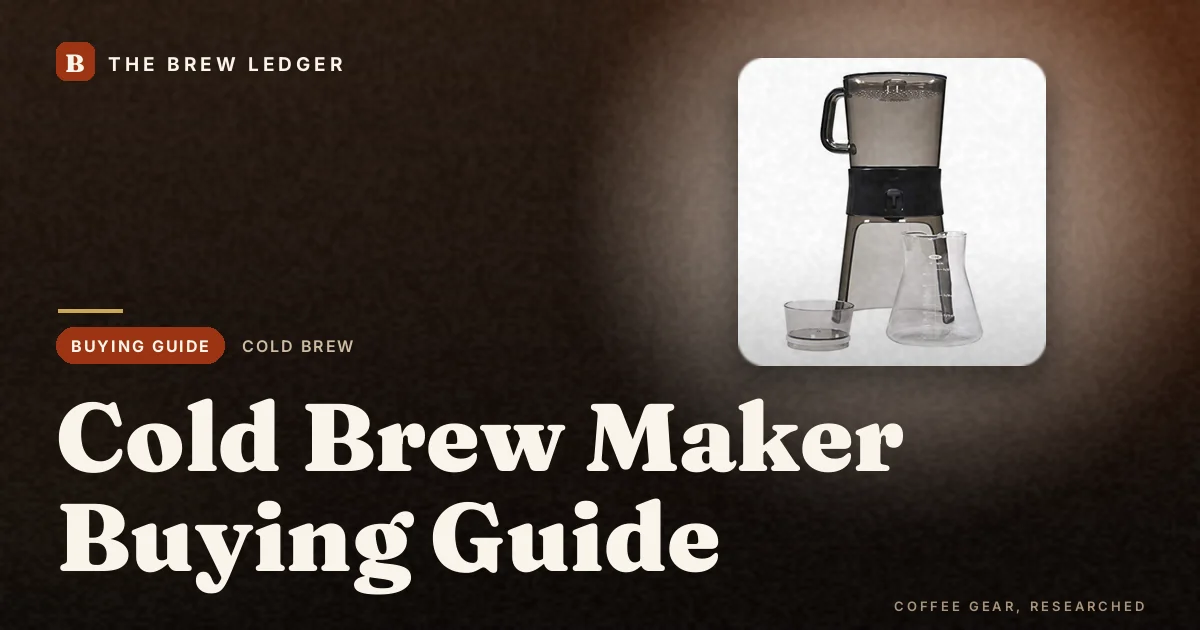
The filter is the most important choice after the method. Felt (Toddy) filters finest and produces the heaviest-bodied cup, but felt must be rinsed and fully air-dried after every use. Ultra-fine steel mesh (OXO) strains well with a quick rinse and never needs replacing. Standard fine mesh (Takeya, Hario, Asobu) is easy to clean but lets light sediment through. Coarse plunger filters (Bodum) drain fastest but produce the siltiest cup. Match the filter to your tolerance for maintenance, not just the cup: the best filter is the one you will actually clean properly.
Batch size: match it to your drinking rate
Count your weekly cold brew consumption before choosing. Solo drinkers doing a glass a day are well served by 1-quart to 1-liter brewers like the Hario Mizudashi or the Takeya 1-quart. Couples and daily drinkers should look at 2-quart pitchers or the Toddy's large batches to brew once a week instead of twice. Oversized brewers waste fridge space; undersized ones turn brewing into a chore. Refrigerated concentrate keeps about 1 to 2 weeks, so weekly brewing is the natural rhythm to target.
Materials and fridge fit
Glass (Hario, Bodum, OXO carafe) is taste-neutral and attractive but heavy and breakable. Tritan plastic (Takeya) is shatterproof and light but can absorb odors over time. Stainless steel (Asobu, KitchenAid parts) is durable and insulating but opaque and pricier. Measure your fridge shelf height before buying: tall brewers like the OXO need vertical clearance, while slim pitchers like the Takeya fit a fridge door. If you serve from the brewer, a tap (KitchenAid) or an easy-pour pitcher design saves daily hassle.
Grind and coffee: the inputs matter more than the maker
No brewer fixes bad inputs. Use a coarse grind, about the texture of coarse sea salt, from a burr grinder or a bag labeled coarse; fine grinds over-extract and clog filters over a long steep. Medium to dark roasts give the classic chocolatey cold brew profile. Start at a 1-to-4 coffee-to-water ratio by weight for concentrate and dilute to taste. Our grind size guide, grinder guide, and coarse-ground coffee guide cover the inputs in detail.
The decision framework: buy if, avoid if
Buy an immersion pitcher (Takeya, Hario, Bodum, County Line Kitchen) if you want the cheapest path to good cold brew, you brew a few times a week, and simple cleanup matters more than maximum clarity. Avoid them if you hate any sediment or want large batches. Buy the OXO if you want the most even extraction and a permanent filter with no maintenance burden. Avoid it if you brew for a household; the batch is too small. Buy the Toddy if you drink cold brew daily and want the richest concentrate in the biggest batches. Avoid it if felt-filter maintenance sounds like a chore you will skip. Buy the Cuisinart DCB-10 if waiting 12 to 24 hours is the reason you do not brew. Avoid it if you prize traditional slow-steep flavor. Buy the Ninja if your household is split between hot and cold coffee. Avoid it if you only drink cold brew; it is overkill.
Questions, answered
How much should I spend on a cold brew maker?
Budget pitchers like the Takeya and County Line Kitchen make genuinely good cold brew for the lowest prices here. Spend more for the OXO's engineering, the Toddy's batch size, or the Ninja's hot-and-cold versatility, not for better basic extraction.
Do I need a special cold brew maker, or can I use a French press?
A French press works in a pinch: steep coarse grounds 12 to 24 hours, then press. Dedicated makers improve on it with finer filtration, better saturation, and storage-friendly designs, but the method is the same.
Immersion or drip tower?
Immersion for nearly everyone: simpler, cheaper, more forgiving, and better for concentrate. Drip towers suit enthusiasts chasing a delicate, tea-like iced coffee and willing to pay several times more for slower brewing.
What is the easiest cold brew maker to clean?
Steel-mesh immersion brewers: the OXO's auto-drain plus rinse-and-go mesh is the easiest, followed by the Takeya's lift-out filter. Felt-filter systems like the Toddy demand the most maintenance.