Head to head
Coffee Press vs Percolator
Coffee press vs percolator: which classic brewer suits your taste, with the Presto and Farberware as the percolator representatives and honest guidance for press loyalists.
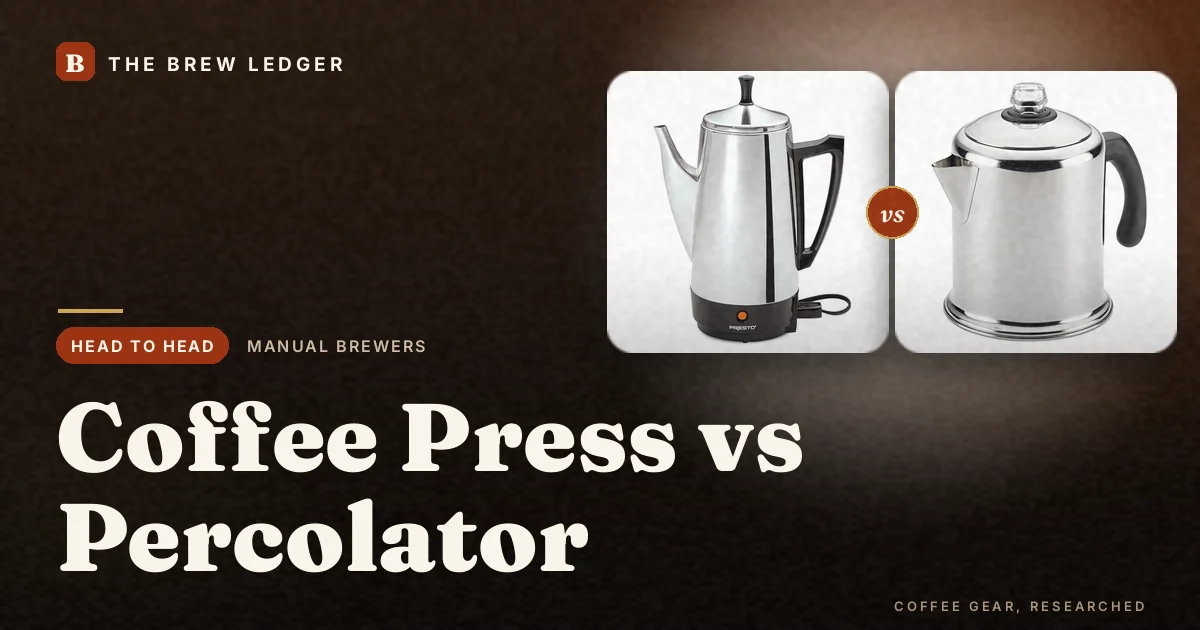

Presto 12-Cup Stainless Steel Percolator
A fast-brewing 12-cup electric percolator in stainless steel with an easy-pour spout.
- Type: Electric percolator
- Capacity: 12 cup
Sources: Presto official product specifications, Major retailer product listings, Published coffee gear reviews
Check current price
Farberware Classic Yosemite Percolator
The stainless steel electric percolator that has anchored American kitchens for generations.
- Type: Electric percolator
- Sizes: 8-cup and 12-cup
Sources: Farberware official product specifications, Major retailer product listings, Published coffee gear reviews
Check current pricePresto 12-Cup Stainless Steel Percolator
What owners report
- Owners praise the pace, brewing 12 cups at roughly a cup a minute
- Many owners value stainless steel inside and out for durability and clean flavor
- Owners say the easy-pour spout reduces dribbles when serving a crowd
- Some owners wish there were a smaller size, since it comes in 12-cup only
- A common complaint is that keep-warm is basic compared with newer designs
- Owners note the tall profile needs clearance under low cabinets
Farberware Classic Yosemite Percolator
What owners report
- Owners praise the stainless steel body in 8-cup and 12-cup sizes for brewing for a crowd
- Many owners value automatic keep-warm holding coffee at serving temperature after brewing
- Owners appreciate the ready light signaling when the brew cycle is complete, and the detachable cord for table serving
- Some owners find the bulky footprint takes real counter space
- A common complaint is the lack of brew-strength control, leaving perk timing entirely up to the user
- Owners note the interior stem and basket assembly has several parts to wash
Our recommendation
Pick the percolator if bold, hot, traditional coffee in large batches is what you actually drink: the Presto brews 12 cups fast, while the Farberware Classic offers size choice with the same proven format. Stick with the coffee press if you love its mellow, full-bodied sweetness and foolproof technique. Neither is objectively better; they are different answers to what a good cup means. Our best percolators guide has the full percolator lineup for converts.
Flavor character
Percolators produce a bold, robust cup with pronounced roast character; the repeated hot-water cycling emphasizes intensity. Coffee presses produce a sweeter, rounder cup where origin flavors and aromatics show more clearly. Drinkers who add nothing to their coffee often prefer the press's nuance; drinkers who like it strong prefer the percolator's punch.
Bitterness risk
Percolators turn bitter when over-perked past 10 minutes or brewed at a rolling boil; the fix is timing and gentle heat. Presses turn bitter when the coffee sits on the grounds after plunging; the fix is decanting immediately. Both have a bitterness trap, but the percolator's is easier to fall into for beginners.
Heat and serving
Electric percolators brew hotter and hold the batch warm automatically, the Farberware and Presto both do this. Press coffee starts cooling the moment it is plunged and must be decanted to avoid over-extraction. For serving a table over time, the electric percolator is the more practical device.
Grind and gear
Both methods want a coarse grind, which is convenient if you own one grinder. The percolator additionally wants attention to timing; the press wants nothing but a timer. Neither needs filters, which keeps ongoing costs at zero for both.
Which suits delicate coffees
The press, by a wide margin. Light roasts and nuanced single origins show their character in immersion brewing but taste harsh under percolation's repeated boiling-water cycling. Percolators shine with medium and dark roasts built for boldness. Match the brewer to the beans you actually buy.
Choose Presto 12-Cup Stainless Steel Percolator if…
- You want the fastest full-batch electric percolator: the Presto's cup-a-minute pace suits entertaining.
- You serve crowds and the easy-pour spout's clean serving matters.
- Bold medium and dark roasts are your daily beans.
Choose Farberware Classic Yosemite Percolator if…
- You want size choice: the Farberware's 8-cup option suits smaller households better than 12-cup-only.
- The classic Yosemite design and long track record matter to you.
- You want the proven default with automatic keep-warm and a ready light.
Questions, answered
Is a coffee press the same as a French press?
Yes. Coffee press, French press, and cafetiere are three names for the same immersion brewer. Our percolator vs cafetiere guide covers the same comparison under the UK term.
Should I switch from a press to a percolator?
Switch if you consistently wish your press coffee were bolder and hotter, and you brew for several people. Do not switch if you love light roasts or the press's sweetness; the percolator will not reproduce those qualities.
Which costs less to run?
Both cost nothing beyond coffee: neither uses paper filters. The electric percolator uses some electricity for brewing and keep-warm; the press uses whatever heats your kettle water. The difference is negligible.
Can a percolator brew as smooth a cup as a press?
Close, with discipline: coarse grind, gentle 7 to 8 minute perk, medium roast beans. It will still be bolder than press coffee by nature. If smoothness is the priority, the press remains the better tool.