Buying guide
Coffee Grinder Buying Guide: Burrs, Settings, and Retention Explained
How to choose a coffee grinder: burr vs blade, conical vs flat, stepped vs stepless, and a decision framework for matching a grinder to your brew method.
Start with our top 3
Burr vs blade: the only debate that matters at the start
Blade grinders chop beans into random sizes; burr grinders crush them to a repeatable size. Uneven particles extract unevenly, so a blade grinder caps your coffee quality no matter how good the beans are. Every grinder worth buying uses burrs. If your budget only stretches to a blade grinder, the low-cost burr grinder guide shows real burr options at the lowest prices.
Conical vs flat burrs
Conical burrs pair a cone with a ring and tend toward a bimodal particle spread that works well for espresso and drip. Flat burrs use two parallel discs and generally produce a more uniform grind prized for pour-over clarity. Larger burrs of either type grind faster and more evenly: the Ode Gen 2's 64 mm flat burrs outclass 40 mm sets on uniformity, which is why burr size is the first spec to compare.
Stepped vs stepless adjustment
Stepped grinders click between fixed settings; stepless grinders adjust infinitely. For drip, pour-over, and press, steps are fine and even preferable for repeatability. For espresso, steps can straddle the ideal setting, which is why espresso grinders like the Eureka Mignon Silenzio use stepless micrometric dials and the 1Zpresso JX-Pro uses 200 fine clicks. Match the adjustment type to your brew method, not to prestige.
Retention and the single-dose question
Retention is the ground coffee left inside the grinder between uses. Hopper grinders retain a gram or two in the grind path, which goes stale and contaminates the next dose. Single-dose grinders minimize this with straight-through paths and knockers. Retention matters most when you brew small doses or switch beans often; for daily drip from one bag, it is a minor concern. The single-dose grinder guide ranks the lowest-retention options.
Decision framework: buy if, avoid if
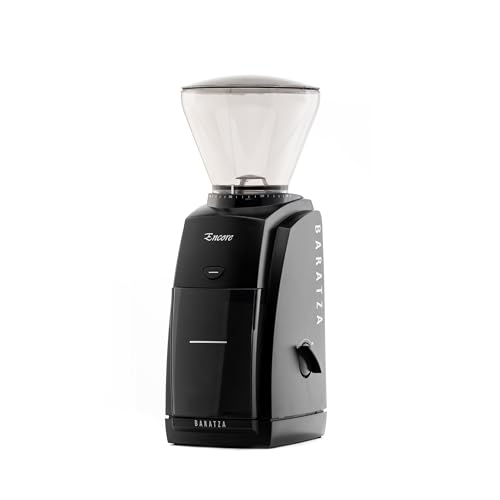
Buy the Baratza Encore if you are upgrading from a blade grinder and brew drip, pour-over, or press; avoid it if espresso is your main method. Buy the Fellow Ode Gen 2 if pour-over clarity is the goal and you will weigh beans per brew; avoid it if you need espresso or hate the single-dose ritual. Buy the 1Zpresso JX-Pro if you want espresso-capable quality on a budget and brew for one or two; avoid it if you grind for a household daily. Buy the Breville Smart Grinder Pro if one machine must serve several methods and people; avoid it if you single-dose expensive beans. Buy the Eureka Mignon Silenzio if espresso is the priority and you want stepless control; avoid it if you mainly brew filter.
What to ignore on the spec sheet
Ignore wattage, which says nothing about grind quality. Ignore vague claims of professional or commercial grade on home grinders. Ignore timer precision as a proxy for dose accuracy on cheap grinders. What predicts cup quality is burr size and geometry, adjustment type and fineness, and retention, roughly in that order.
Questions, answered
How much should I spend on a coffee grinder?
Spend enough to get real burrs matched to your method: a hand grinder like the Chestnut C2 for filter, the Encore for electric filter brewing, and more for espresso-capable adjustment. The under-500 guide maps the value ceiling.
Should the grinder cost more than the brewer?
Often, yes. The grinder influences extraction more than the brewer does, so budget priority should go to the grinder first. A great grinder with a basic brewer beats the reverse pairing.
Electric or manual?
Manual buys more burr per dollar and travels well; electric buys speed and convenience. For one or two daily brews, manual is practical. For households or offices, electric wins. The single-dose guide compares both formats.
When do I need to upgrade my grinder?
When your brew method outgrows it: moving to espresso demands fine adjustment, and chasing pour-over clarity rewards larger flat burrs. If your current grinder cannot produce even particles, no technique fix compensates.